

A team investigated data from trials of tofacitinib, adalimumab, and placebo.
A team investigated data from trials of tofacitinib, adalimumab, and placebo.

Study drug also recently showed promise in treating psoriatic arthritis.

The safety profile is consistent with previous studies of the ixekizumab.

The safety profile of upadacitinib is consistent with phase 3 rheumatoid arthritis studies.

Remission and LDA rates generally increased over time in patients with psoriatic arthritis receiving tofacitinib.

The late-breaking data reveal the safety and efficacy of upadacitinib versus placebo and adalimumab.

Asian countries regularly see higher rates of SLE prevalence globally.
The incidence rate of serious infection events and opportunistic infections was higher among the upadacitinib 30 mg group than the 15 mg group.

German researchers reported at EULAR this week that patients with rheumatic and musculoskeletal-related pain are increasingly turning to opioids and continue to take them even after the pain subsides.

The findings are based on data from a 24-week observation from an ongoing phase 3 PATERA study.

COVID-19 was center-stage at this year's EULAR meeting. Dr. Pedro Machado, a rheumatologist with the University College London and chair of EULAR's Standing Committee for Epidemiology and Health Service Research shared the results of a study on patients with rheumatic disease who contracted COVID-19. He and his team found that patients taking a higher dose of prednisone, had an increased of being hospitalized. But patients receiving TNF blockers were less likely to be hospitalized. In this interview, Dr. Machado talks with us about the findings.

In a late-breaking abstract, investigators test nanoparticle treatment using in vivo models.

In an abstract presented at EULAR 2020, investigators find more serious adverse events in the upadacitinib treatment arms compared to placebo.

Patients report sustained improvements in pain and fatigue from taking ixekizumab every 2 or 4 weeks over 3 years.

The findings are important to understand treatment persistence and switch patterns in rheumatoid arthritis patients with poor prognostic factors in a real-world setting.

Dr. Gregg Silverman said identification of Ruminococcus gnavus could allow earlier diagnosis of lupus nephritis.

Findings suggest 5-10 mg of tanezumab significantly improve pain versus placebo in patients with chronic low back pain.

Eli Lilly announced this week that Taltz (ixekizumab) has been approved by the U.S. Food and Drug Administration (FDA) for the treatment of active non-radiographic axial spondyloarthritis (nr-axSpA). And, this week during the EULAR annual meeting, the company is reporting results from the 52-week SPIRIT phase 3b/4 trial for psoriatic arthritis comparing ixekizumab to adalimumab.

The results highlight a significant improvement in rheumatoid arthritis signs and symptoms for those who used upadacitinib over placebo and adalimumab.
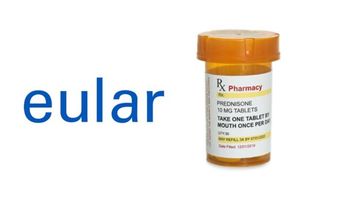
Rheumatic disease patients treated with anti-TNF therapy and who contracted COVID-19, were hospitalized less often than patients treated with glucocorticoids, shows an observational study presented on Wednesday at the European Congress of Rheumatology (EULAR) annual meeting-which is being held virtually this week from the homes of more than 18,000 registered attendees.

In a study presented at EULAR, investigators find 14-3-3η baseline levels did not correlate with baseline mTSS.

In both DISCOVER trials, investigators find guselkumab effective against active psoriatic arthritis domains.

The treatment has already proven to reduce oral ulcers associated with Behcet’s syndrome.
Patients are unaffected by the switch from ADL-EU to ADL-PF.

Medical director of Horizon Therapeutics discusses changes in rheumatology practices as a result of the ongoing pandemic.

Researchers writing in Arthritis and Rheumatology report that high levels of anti-citrullinated protein antibodies (anti-CCP2) appear to be markers for future cardiovascular events in rheumatoid arthritis patients.

Glucocorticoids are the most frequently used class of drugs for rheumatoid arthritis because they are effective at relieving symptoms, and widely available at low cost. While this drug class has clear benefits for rheumatoid arthritis, it comes at a price in terms of a wide array of potential side-effects. Test your knowledge on the use of corticosteroids in rheumatoid arthritis with this quiz.

The sBLA indication is the fifth for the IL17A inhibitor, which showed reduction of inflammatory signs and symptoms in treated patients at 52 weeks.

A new analysis of data from Northwestern Medicine found some chronic inflammatory diseases were associated with a 7-fold increase in risk of heart failure.

In this week's news roundup from Rheumatology Network we continue our series on gout. Last week we featured a discussion with Dr. John D. Fitzgerald focusing on ACR's new gout treatment guidelines and this week, we talk with Dr. Christopher Parker, chief of rheumatology at Austin Diagnostic Clinic in Texas. Dr. Parker addresses mythbusters and patient engagement.