






Spondyloarthritis
Latest News
Advertisement
Latest Videos







CME Content






















































Advertisement
More News

Results of the SELECT-AXIS 2 study supported the efficacy and safety profile of upadacitinib in patients with active ankylosing spondylitis who had an inadequate response to biologic DMARD therapy.

At the 12-month mark, 52% of patients in the axSpA cohort and 76% of those in the IBD cohort achieved clinical remission.

In this Q&A, Mireia Moreno, MD, discussed the findings of a study that evaluated the influence of HLA-B27 in the phenotypical expression of peripheral spondyloarthritis (pSpA), including psoriatic arthritis, which is the most well-defined pSpA.

ASAS40 responses increased between week 16 and week 52 in patients with non-radiographic axial spondyloarthritis and ankylosing spondylitis.

There were no significant safety issues in the group of patients treated with secukinumab for more than 3 years.

Data from the CONSUL trial provide insight into the effects of TNF inhibitor monotherapy compared against combination therapy with NSAIDs for blunting radiographic spinal progression in adults with radiographic axial spondyloarthritis.

An analysis of more than 17,000 Veterans suggests early initiation of TNF inhibitor therapy in patients with ankylosing spondylitis was associated with an increased risk of incident cardiovascular disease and major adverse cardiovascular events.

The sixth indication for the JAK inhbitior from AbbVie makes it the first in class approved for both nr-axSpA and ankylosing spondylitis.
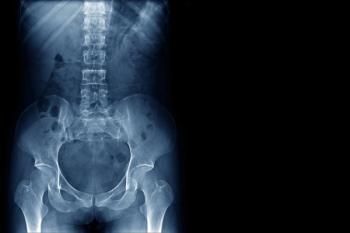
The Committee for Medicinal Products for Human Use (CHMP) recommends approving upadacitinib 15 mg, once daily, for the treatment of active non-radiographic axial spondyloarthritis in adults patients with inflammation and inadequate response to NSAIDs.

Désirée van der Heijde, MD, PhD, explains the results of a recent trial evaluating the safety and efficacy of bimekizumab in patients with active ankylosing spondylitis.

The phase 3 research being presented at the EULAR 2022 conference evaluated the efficacy and safety of upadacitinib in patients with active non-radiographic axial spondyloarthritis.
Filip Van den Bosch, MD, discusses his presentation, “Efficacy and Safety of Upadacitinib in Patients With Active Non-Radiographic Axial Spondyloarthritis: a Double-Blind, Randomized, Placebo-Controlled Phase 3 Trial."

Upadacitinib met the primary endpoint of ASAS40 in patients with active non-radiographic axial spondyloarthritis and treatment-refractory active ankylosing spondylitis with inadequate response to biologic disease-modifying antirheumatic drugs.


Of 185 outpatients that completed the questionnaire, 146 patients (78.9%) were considered to have poor adherence to exercise therapy.

The European Alliance of Associations for Rheumatology (EULAR) recommends screening and early management of cardiovascular disease in patients with radiographic axial spondyloarthritis.

On April 29, AbbVie announced the US FDA had granted approval to upadacitinib 15 mg (RINVOQ) for treatment of active ankylosing spondylitis among adult patients who had inadequate response or intolerance to at least 1 TNF inhibitor.

“Understanding the impact of axSpA on pregnancy outcomes is a vital component of improving management of women with axSpA at every stage of their lives,” investigators stated.

Promising results were announced by UCB after a Phase 3 study evaluated bimekizumab for non-radiographic axial spondyloarthritis and met all endpoints.
Bimekizumab, an interleukin 17A (IL-17A) and IL-17F inhibitor, met both primary and secondary endpoints for treating adult patients with non-radiographic axial spondyloarthritis.
Jessica Walsh, MD, explains the importance of understanding treatment satisfaction and decision-making in patients with axial spondyloarthritis based on patient-reported outcomes.

“Managing pain is an important treatment goal in patients with ankylosing spondylitis, however, pain is often underestimated by clinical disease activity scoring tools, and 20% to 30% of patients report pain despite treatment with TNFis,” investigators stated.
Chronic back pain, a common symptom of axial spondyloarthritis that increases disease burden and reduces quality of life, may be improved by subcutaneous injection of secukinumab 150 mg or 300 mg.

Upadacitinib achieved positive results from both Phase 3 SELECT-AXIS clinical trials, which focused on patients with ankylosing spondylitis and non-radiographic axial spondyloarthritis.

The 2 studies focused on upadacitinib treatment for one group of patients with ankylosing spondylitis and another group of patients with non-radiographic axial spondyloarthritis.
Advertisement
Advertisement