

























































Take this 5-question quiz for a quick refresher on the ACR guidelines.

Take this 5-question quiz for a quick refresher on the ACR guidelines.

A look at the relationship between disease activity, progression, and low bone mineral density in axial spondyloarthritis.

Dutch researchers found no need for a gender divide in the diagnostic approach to suspected axSpA.

Findings from the first study to incorporate a meta-analysis on TNFi dose adjustment in an axSpA population.

Be vigilant for diffuse idiopathic skeletal hyperostosis in patients who have ankylosing spondylitis, since they may be less clearly symptomatic.

Concerns have been raised in the past about the possibility of infection caused by immune suppression.
The presence of either type of pain may reflect higher disease activity and greater functional limitation.
Be aware that changes in geometry, bone mineral density, and micro-structure appear early in the disease course of axSpA.
A non-pharmacologic treatment may have wide-reaching benefits in AS, ranging from weight management to better spinal mobility.
Findings from the first report on sex-specific predictors of spinal radiographic progression in ankylosing spondylitis.
Be aware that disease activity scores may not correlate well with pain.
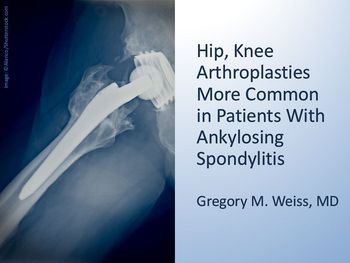
What are the implications for the timing of these procedures in younger patients with AS?

Findings from the first study to assess scoring methods in early axSpA-before sacroiliitis is present.

Similarities between ankylosing spondylitis and non-radiographic axial SpA, a caveat about positive MRI scans, and the impact of obesity on disease outcomes.
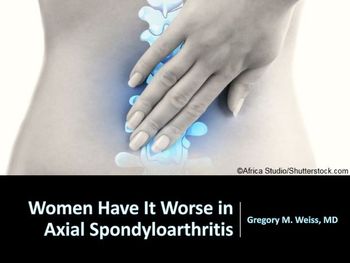
Be careful not to discount the disease burden in women with axSpA.
When disease activity is high and/or function impaired, consider depression a likely comorbidity that may be a result of inflammation.

Two recent studies focus on radiographic progression in ankylosing spondylitis and the risk of osteoporosis in axial spondyloarthritis.
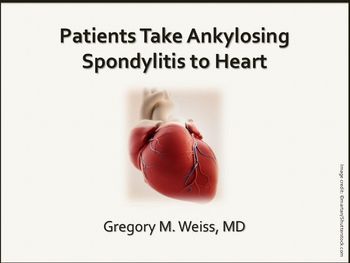
Be vigilant for cardiovascular risk factors in patients with ankylosing spondylitis, advise Norwegian researchers.
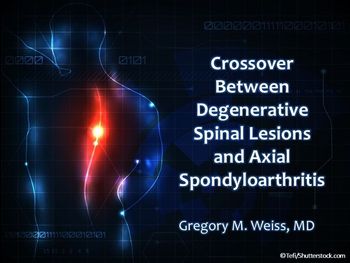
A diagnostic challenge: degenerative spinal changes are common and can mimic axial spondyloarthritis.

This study suggests a link between inflammatory arthritis and the development of serious mental health consequences.
New classification criteria for spondyloarthritis cover a wide spectrum of patients.
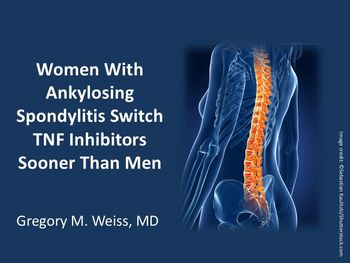
Men are more likely to stay the course of TNF inhibitor therapy.
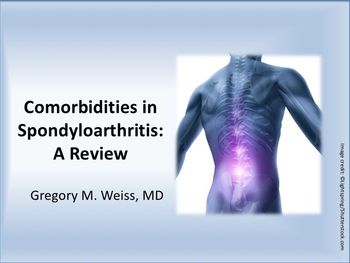
Osteoporosis, cardiovascular disease, cancer, infection . . . which of these comorbidities are of greatest concern in patients with SpA?
Which patients with spondyloarthritis are at greatest risk for renal impairment?
Highlights of recent research include a novel predictor of osteoporosis and the surprising effects of alcohol on disease activity.