





Osteoporosis
Latest News
Advertisement
Latest Videos



Podcasts



CME Content






















































Advertisement
More News
Fragility fractures occur every minute in France, totaling 500,000 annually. A report calls for expanding fracture liaison services to address the growing osteoporosis burden.

Both treatment arms experienced significant improvements in measured parameters from baseline, although these were not all statistically significant.

The mean percentage change from baseline in lumbar spine bone mineral density was comparable between treatment groups at 18 months.
The study demonstrated clinical similarity between the proposed biosimilar and the reference products.

Treatment with romosozumab or denosumab demonstrated comparable results among patients with either primary osteoporosis or those with rheumatoid arthritis complicated with osteoporosis over a 24-month period.

The first guideline for the management of osteoporosis in men provides recommendations for diagnosis, monitoring, and treatment.

The decision was based on clinical studies demonstrating no clinically meaningful differences between the biosimilar and its reference product.

In a new study, 31.9% of individuals with osteoporosis had depressive symptoms and 10% had probable depression.

On January 19, 2024, the FDA announced the addition of a Boxed Warning to the labeling of denosumab (Prolia), citing evidence of an increased risk of severe hypocalcemia in patients with chronic kidney disease.
Results showed treatment with dipeptidyl peptidase-4 inhibitors (DPP-4i) improved bone mineral density and reduced osteoporosis risk in patients with type 2 diabetes.
The use of SGLT2 inhibitors was associated with similar or lower risks of fractures as incretin-based drugs, even in the high-risk patient population.

A prospective, nonrandomized trial has returned results indicating adolescents and young adults who undergo bariatric surgery experienced a decrease in bone density relative to their counterparts who opted for exercise and nutrition counseling.

Patients receiving 6MP prophylaxis experienced significantly reduced incidence of arthromyalgia and Health Assessment Questionnaire worsening of 22% or increase of .25.

An analysis of data from more than 60,000 postmenopausal women within the Women's Health Initiative has returned results indicating the guideline-recommended FRAX score may be insufficient for making screening decisions.

Most associate bariatric surgery with improved health outcomes, but a new study suggests clinicians and patients should be aware of potential changes in bone density brought on as a result of undergoing bariatric surgery.
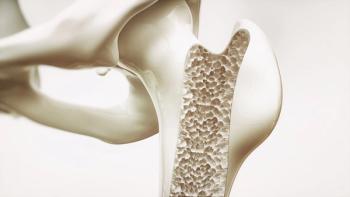
A negative relationship between bone mineral density (BMD) and hyperuricemia in total, as well as in the L1, L2, and L3 lumbar vertebrae, was demonstrated in the multivariable-adjusted regression models.

Investigators identify a strong association between exposure to air pollution and bone mineral loss in postmenopausal women.

Each 1-SD increment in HDL-C level was associated with a 14% higher risk of fractures in cohort study of approximately 16,000 community-dwelling healthy adults.
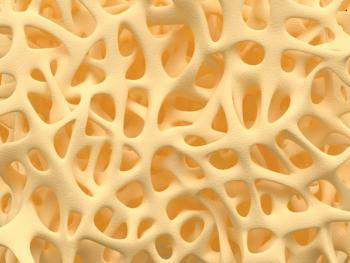
A systematic review and meta-analysis of observational studies of people with diabetes suggest more than 1-in-4 also had a diagnosis of osteoporosis.
Released on January 3, the American College of Physician's living osteoporosis guideline represents the organization's first update on the topic since 2017 and includes 6 specific recommendations for pharmacologic management of osteoporosis or low bone mass.

Announced by Radius Health on December 20, the US FDA approval for abaloparatide (Tymlos) indicates the agent as a treatment to increase bone density in men with osteoporosis at high risk of fracture or in patients who have failed or are intolerant to other available osteoporosis therapy.
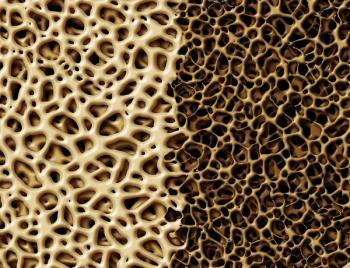
Anti-osteoporotic treatment resulted in increased BMD to a greater extent in patients treated with less than 5 mg per day of prednisone.

An analysis of data from the Cancer Prevention Study-II suggests cancer survivors had a more than doubling in risk of frailty-related bone fractures than their counterparts without cancer.
E Michael Lewiecki, MD, discusses his CCR West presentation “Sequential Therapy in Osteoporosis: When Does the Order Matter?”
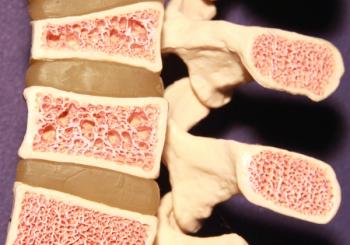
E Michael Lewiecki, MD, discusses his CCR West presentation “When is Osteopenia Osteoporosis?”
Advertisement
Advertisement