

Compared with other bDMARDs, patients with rheumatoid arthritis treated with tofacitinib had a 4-fold reduced incidence of interstitial lung disease.
Lana Pine is the editor of HCPLive Rheumatology. She is an experienced editor and technical writer with a demonstrated history of working in the banking and publishing industries. In her free time, she enjoys cooking, yoga, listening to podcasts, and drawing. She can be reached via email at LPine@mjhlifesciences.com.
Compared with other bDMARDs, patients with rheumatoid arthritis treated with tofacitinib had a 4-fold reduced incidence of interstitial lung disease.

Upadacitinib, a selective and reversible Janus kinase (JAK) inhibitor, may be a promising treatment option for patients with systemic lupus erythematosus.

SEL-212, an alternative to standard therapy that is administered once monthly, has proven to be particularly helpful for patients with severe gout, a historically underserved population.

An analysis of perimenopausal women with rheumatoid arthritis indicated that patients receiving exogenous sex hormones more frequently achieved SDAI- and CDAI-defined remission.

Often overlooked and underfunded, as well as being underpaid compared to internal medicine, it is difficult to convince prospective medical students, many of whom already have substantial debt, to choose a career in pediatric rheumatology.

The phase 3 DISCOVER-1 and DISCOVER-2 studies were used to evaluate dactylitis resolution in guselkumab-treated patients with psoriatic arthritis through 1 year.

Polypharmacy, defined as ≥5 concomitant drugs, was significantly higher in patients with psoriatic arthritis when compared with controls (49% vs 17%, respectively).

Adult patients with traumatic brain injury-induced fibromyalgia were randomized 1:1 to receive hyperbaric oxygen therapy or pharmacological intervention.

Results demonstrate that guselkumab was well-tolerated in studies continuing for 1 to 2 years among patients with active psoriatic arthritis regardless of TNFi experience.

Dialysis-dependent patients in the US with gout have an increased risk of cardiovascular comorbidities, hospitalization, and mortality. Results emphasize the need for improved treatments to enhance outcomes for this patient population.

Disease activity and burden were higher in patients with rheumatoid arthritis with Medicaid or Medicare coverage, African American patients, and those residing in Southern regions.

A brief increase in venous thromboembolism (VTE) was reported within 30 days after a hospitalization or primary care visit for gout flare. The highest incidence occurred during the 16-30 day period after the flare.

Radiographic non-progressors treated with guselkumab achieved patient-reported minimal disease activity criteria of minimal pain and normalized physical function more often than radiographic non-responders.

Compared with the control group, patients in the exercise for wellbeing (Qi Gong) and physiotherapy groups reported statistically significant improvements at week 5 in joint range of movement, muscle strength, spirometry, and quality of life.

Improvements may be due in part to the association between weight loss and fewer pain symptoms in patients with fibromyalgia.

The approval was based on positive results from the Phase 3 SAPHYR trial, which showed that nearly 3 times more patients achieved sustained remission with sarilumab when compared with placebo.

Results of a recent review showed that adalimumab, etanercept, golimumab, and infliximab are effective and well-tolerated treatments options for patients with juvenile idiopathic arthritis.

Nipocalimab, a FcRn blocker, significantly improved symptoms and reduced immunoglobulin autoantibody levels in patients with myasthenia gravis.

Multivariable models indicated that improvements in the physical component score and mental component score could be predicted by better self-efficacy scores in patients with systemic lupus erythematosus.

Patients with juvenile idiopathic arthritis were at a greater risk of developing autoimmune thyroid disease if they were female, reported ANA and/or RF positivity, and a family history of thyroid disease.
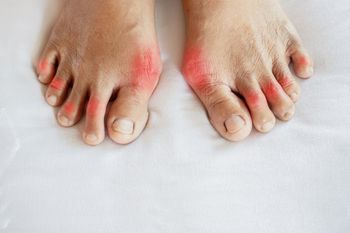
Investigators evaluated the link between gout and thalassemia using data from Taiwan's Longitudinal Health Insurance Database 2000 (LHID 2000).
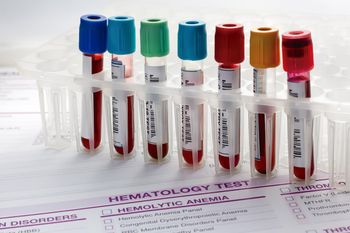
Of the 23 biomarkers identified in patients with gouty arthritis and hyperuricemia, kynurenic acid, thymine, and phosphatidylinositol (PI) differed from previous gout research.

Ginger Hultin, MS, RDN, explained the benefits of an anti-inflammatory nutrition plan for patients living with rheumatic and autoimmune conditions, as well as what rheumatologists need to know.

Compared with treatments like allopurinol, nanoparticles can improve the biocompatibility and bioavailability while reducing toxicity and side effects in patients with gout.

Results of a recent study indicated that when a patient is able to temper their underlying disease, it can improve their experience of centrally sensitized pain despite not obtaining low disease activity.

Roy Fleischmann, MD, examined the necessity of performing repeated x-rays in patients with rheumatic disease as a part of disease management.

Guselkumab, an interleukin-23 inhibitor, demonstrated sustained improvements in both TNF-naïve and TNF-experienced patients with psoriatic arthritis.
Pain, a key issue for patients with rheumatic diseases, is generally ranked as one of the top complaints of disease experience.
Philip Mease, MD, discusses other factors, besides drug inefficacy, that may impact pain in patients with rheumatic and autoimmune conditions.

Anisha Dua, MD, MPH, defines IgG4 and explains why IgG4-related disease is often difficult to diagnose, in part because it regularly affects a variety of organ systems.