



























































Systemic Lupus Erythematosus

Latest News


CME Content


There may be genetic susceptibility factors for systemic lupus erythematosus (SLE) that act only in men. In about 1% of families with SLE, all the patients with SLE are male and the women universally have positive antinuclear antibodies; also, men with SLE have more children with SLE than do women with SLE.

Late-onset systemic lupus erythematosus (SLE), often considered to have a benign disease course, actually involves greater disease activity and comorbidities than early-onset SLE. Differences in disease activity may be associated with an interaction between the SLE and age.

The prevalence and extent of vascular calcification over the thoracic aorta and coronary and carotid arteries are greater in patients with systemic lupus erythematosus (SLE) than in healthy persons. Because the process of atherosclerosis related to SLE disease activity is diffuse and widespread rather than limited to the coronary arteries, coronary calcification used alone as a marker for atherosclerosis may not disclose the association.

The features of systemic lupus erythematosus (SLE) are common in the lifetime course of rheumatoid arthritis (RA) and are significantly associated with an increased mortality risk, even after adjusting for well-described RA-specific predictors of mortality. For some SLE features, the increased risk may be as high as 6-fold.

ABSTRACT: Increased disease recognition and therapeutic advanceshave led to improved survival in patients with systemic lupus erythematosus(SLE) over the past several decades. As a result, managementof the long-term comorbidities and complications of SLE has taken ongreater importance. Maintaining a high index of suspicion for cardiovasculardisease in SLE and screening for traditional risk factors isprudent. Minimizing the use of immunosuppressive agents remainsthe main strategy for decreasing infections, but providing routinevaccinations also can decrease the burden of infections. Despite thehigh prevalence of osteoporosis, screening and treatment remainsuboptimal in patients with SLE and deserve increased attention.Patients with SLE are at increased risk for malignancy and physiciansshould remain vigilant for cancer in these patients. (J MusculoskelMed. 2008;25:316-320)

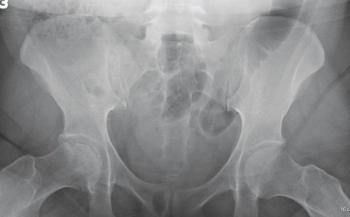
A 29-year-old African American woman came to our rheumatology clinic with right hip pain that had been getting worse for the past 3 months. She had been diagnosed with systemic lupus erythematosus (SLE) 2 years earlier. She reported excruciating right hip pain and mild pain in her left hip on weight bearing and, occasionally, at rest.