

























































Psoriatic Arthritis
Latest News
Advertisement
CME Content
Advertisement

Physicians from New York University Langone Health report in the New England Journal of Medicine that the baseline use of biologics was not associated with worse outcomes in a group of 14 patients with autoimmune disease who contracted COVID-19.

Can a patient with hidradenitis suppurativa develop rheumatoid arthritis? Apparently so, according to researchers writing in JAMA Dermatology this month.

Doses of secukinumab are clinically safe and beneficial for long-term treatment of psoriatic arthritis.

Patients with psoriatic arthritis are not at an increased risk of cancer, however.
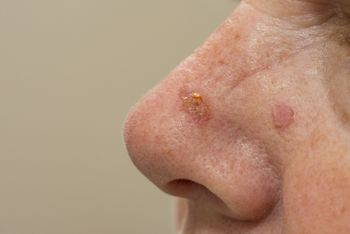
A systematic review and meta-analysis published today in JAMA Dermatology confirms that psoriasis patients have a slightly increased risk of cancer, specifically, keratinocyte cancer and lymphomas.

The practice of systematically tapering biological disease modifying antirheumatic drugs (bDMARDs) in all patients with inflammatory arthritis who have reached a certain disease activity target may not be supported by current evidence, according to a review published recently in Autoimmunity Reviews
Findings of a phase 3 clinical trial show that patients who take a 15 mg or 30 mg dose achieved higher ACR20, ACR50, and ACR70 scores than those who had a placebo.

A diagnosis of hidradenitis suppurativa may precede the development of ankylosing spondylitis, psoriatic arthritis or rheumatoid arthritis in patients, say researchers writing in the January 22 issue of JAMA Dermatology.

Psoriatic arthritis patients with moderate disease activity were more likely to reach treatment targets or low disease activity at week 52 with apremilast (Otezla, Celgene) than patients with high disease activity, researchers report in the January 7 issue of Arthritis Care and Research.

Secukinumab (Cosentyx, Novartis) provided sustained improvements through five years in the signs and symptoms of psoriatic arthritis with no new safety signals, say researchers recently writing in ACR Open Rheumatology.

How therapies are advancing treat-to-target strategies, while the field faces a physician shortage issue.

Among the most noteworthy in 2019: Treatment of rheumatologic diseases with interleukin inhibitors may raise patients’ risks for serious and opportunistic infections and possibly also cancer, researchers reported in JAMA Network Open in October.

In this month's psoriatic arthritis quiz, we revisit studies presented at the American College of Rheumatology annual meeting last month. Included here is one that highlights interesting trends in prescribing practices by physicians from different specialties. Which specialty is more likely to prescribe more medications?
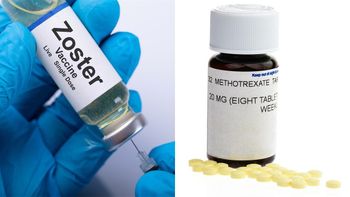
The safety of live virus vaccines in patients receiving biologic therapies was confirmed in a study of 617 patients recently presented at the American College of Rheumatology annual meeting this month.

Philip Mease, MD, director of rheumatology research at the Swedish Rheumatology Research Group, discusses the current state of treatments for psoriatic arthritis.

Elaine Husni, MD, discusses the results of a trial she led examining quality of life changes in psoriatic arthritis patients receiving golimumab over a 1-year period.

In this month's psoriatic arthritis clinical quiz, we test your knowledge on infections associated with psoriatic arthritis, the use of complimentary medicines, erosive joint destruction and more.

Philip Mease, MD, Director of Rheumatology Research at the Swedish Rheumatology Research Group, discusses why he believes some rheumatologists are skeptical of JAK inhibitors and where they fit in current treatment algorithms.

ACR Annual Meeting: The use of methotrexate combined with or without the oral JAK inhibitor tofacitinib produced no clinically meaningful difference in 179 psoriatic arthritis patients from the OPAL Balance study, presented at ACR 2019 this week.
Full 52-week results of the SPIRT-H2H trial were presented during the late breaking session at ACR 2019.
Philip Mease, MD, Director of Rheumatology Research at Swedish Rheumatology Research Group, reflects upon new data and discusses where he sees guselkumab fitting into a PsA patient's current treatment plan.
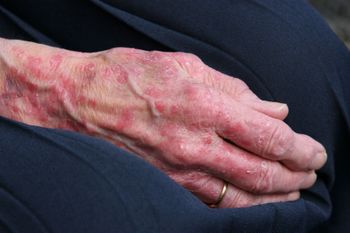
ACR Annual Meeting: In patients with active psoriatic arthritis, who are biologic-naïve, guselkumab (Tremfya, Janssen) improved joint and skin symptoms, physical function, quality of life, and resolved enthesitis and dactylitis, according to a study presented at annual meeting of the American College of Rheumatology in Atlanta on November 12.

Elaine Husni, MD, discusses how she goes about choosing which therapy is most appropriate for a patient with psoriatic arthritis.
Advertisement
Advertisement