

This article originally appeared on DiagnosticImaging.com
This article originally appeared on DiagnosticImaging.com
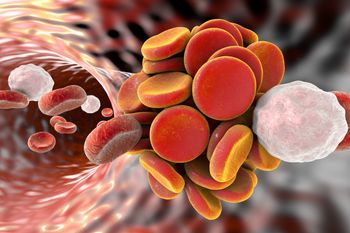
Blood clots can cause critical or lethal problems in patients, and individuals with antiphospholipid syndrome can experience these events at any location in their bodies. However, there’s not a great deal of clarity on which risk factors are most significant for this condition. In this Q&A, we feature a conversation with Eileen J. Lydon, ANP-BC, a rheumatology nurse practitioner at New York University Langone Orthopedic Hospital, who recently spoke on recommendations for treating patients with antiphospholipid syndrome.

Patients with rheumatoid arthritis and diabetes saw greater improvement in blood glucose levels with sarilumab than adalimumab or placebo, shows a study spresented at Clinical Congress of Rheumatology West held in San Diego last month.

A clinical trial presented at the Clinical Congress of Rheumatology West in San Diego last month shows that the oral JAK inhibitor tofacitinib improved the signs, symptoms and quality of life for patients with psoriatic arthritis who have not had an adequate response to DMARDs or TNF inhibitors.

In a study presented at the Clinical Congress of Rheumatology West held in San Diego last month, researchers led by Brian LaMoreaux, M.D., report that gout was found to be a “a common comorbidity in renal transplant patients.”
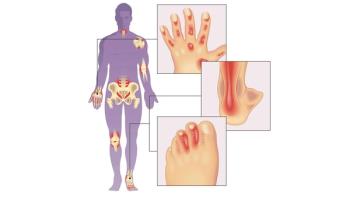
Psoriatic arthritis can appear in a variety of ways from nail disease to peripheral joint pain. But, there are a few hallmark signs that can send a rheumatologist or rheumatology nurse in the right direction. In this Q&A, Linda Grinnell-Merrick, NP, discusses the ins and outs of a psoriatic arthritis diagnosis.

From transitioning a pediatric rheumatology patient to adult care to re-evaluating a missed diagnosis, in this slideshow, we highlight some key presentations from the annual Rheumatology Nurses Society meeting held last month.

Psoriatic arthritis can manifest in a variety of ways from nail disease to peripheral joint pain. But, there are a few hallmark signs that can point a rheumatologist or rheumatology nurse in the right direction. In a presentation given at the Rheumatology Nurses Society annual meeting in August, Linda Grinnell-Merrick, NP, an allergy, immunology, and rheumatology nurse practitioner at the University of Rochester Medical Center, discussed the treatment of psoriatic arthritis.

Better communication between pediatric and adult rheumatologists is especially important as pediatric patients with juvenile idiopathic arthritis transition to adult care. In this Q&A, we revisit a Rheumatology Nurses Society annual meeting presentation made last month by Cathy Patty-Resk, MSN, RN, CPNP, a pediatric rheumatology nurse practitioner with the Children’s Hospital of Michigan.
A missed diagnosis can have negative consequences for patients, making it critical for providers to have a better understanding of vasculitis and its related syndromes. In a presentation given at the Rheumatology Nurses Society annual meeting earlier this month, Jeffrey Kaine, M.D., an independent rheumatology consultant based in Cullowhee, N.C., discussed the challenges in diagnosing and treating vasculitis. In this Q&A, Dr. Kaine covers some of the high points from his talk.

The Rheumatology Nurses Society met this month for their annual meeting. In this Q&A, we revisit a talk by Monica Richey, MSN, a rheumatology nurse practitioner with Northwell Health in New York who discusses treatment challenges in lupus.

One of the most common topics among healthcare providers and patients is the growing conversation around medical marijuana and CBD oils, particularly, it’s potential to alleviate pain and improve quality of life. In this Q&A, Nancy Delnay, a pediatric nurse practitioner with Akron Children’s Hospital, discussed the state of medical marijuana and CBD oils.

Bone erosion, fat in joint spaces (backfill), and ankylosis visible on MRI could help identify women with axial spondyloarthritis, investigators wrote in a research article published last month in Arthritis & Rheumatology.

In Europe, an expert panel is recommending new evidence-based classification criteria for the four classic forms of hereditary recurrent fevers and for non-hereditary, periodic fever, aphthosis, pharyngitis and adenitis.

Periodontal disease and periodontal inflammation appear to be present in individuals who are at risk of developing rheumatoid arthritis long before they begin to show signs of disease, shows new research published in JAMA Network Open.

Identifying and treating symptoms that can appear years before the clinical onset of rheumatoid arthritis could play a role in helping patients offset the condition. And now, new research that identifies a bacteria as a potential cause of these symptoms has one rheumatologist positing whether improved oral care, or maybe a vaccine, might be effective in preventing rheumatoid arthritis.

Steriod-related damage builds over time for patients with childhood-onset lupus leading to cataracts, avascular necrosis, diabetes and osteoporotic fractures. Learn more in this slideshow.

Polymyalgia rheumatica treatment varies significantly in glucocorticoid dosages, tapering strategies and DMARD use. EULAR and ACR have published treatment recommendations. In this slideshow, we highlight the recommendations.
While gout does not increase the risk of death post-acute coronary syndrome, a new study suggests it may increase an individual’s risk for readmission after heart failure, as well as the number of days he or she will spend on the hospital.

Patients with severe psoriasis are also at a significant increase for developing advanced liver fibrosis, new research shows

Women who have primary Sjögren’s Syndrome also have decreased lifetime exposure to estrogen, a new study has determined.
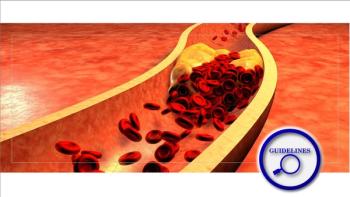
EULAR has issued new treatment guidelines for antiphospholipid syndrome, a disorder of the immune system that causes blood clots. Among the recommendations, high risk individuals who carry the antiphospholipid antibody should take low-dose aspirin, even if they are asymptomatic. This also applies to systemic lupus erythematosus patients and women with a history of obstetric antiphospholipid syndrome.

Rheumatoid arthritis patients who failed first-line methotrexate achieved better outcomes with upadacitinib monotherapy, shows a new clinical trials report.

Rheumatoid arthritis patients treated with baricitinib at any point during their treatment, experience improved outcomes, a new clinical trials report shows.
Women who have primary Sjögren’s Syndrome also have decreased lifetime exposure to estrogen, a new study finds.

Children born to women who have rheumatoid arthritis during pregnancy could experience life-long health effects due to changes to DNA that alter genetic activity, new research indicates.

Sjögren’s Syndrome affects American Indians at a higher rather rate than other ethnic groups, but the lack of classically-associated disease symptoms makes diagnosis difficult, new research shows.

The questions patients ask sometimes differ from the questions doctors want them to ask, find researchers reporting in Arthritis Care & Research. In this slideshow, we compare the top five questions patients ask after an osteoarthritis diagnosis to the top five questions doctors had in mind.

Patients with systemic lupus erythematosus (SLE) are at an increased risk for fractures, new research shows. The risk is particularly high among patients with lupus nephritis.

Fatigue in patients with systemic lupus erythematosus (SLE) has been linked to anti-NR2 antibodies, which responds to treatment with belimumab, a study shows.

July 14th 2020

February 22nd 2019

March 4th 2019

March 11th 2019

March 11th 2019

March 18th 2019