
Experts discuss American College of Rheumatology guidelines on transitioning patients from TNF inhibitors to non-TNF targeted therapies like Janus kinase inhibitors, as well as factors influencing treatment switching decisions in clinical practice.

Experts discuss American College of Rheumatology guidelines on transitioning patients from TNF inhibitors to non-TNF targeted therapies like Janus kinase inhibitors, as well as factors influencing treatment switching decisions in clinical practice.

Experts discuss strategies for achieving low disease activity or remission in patients, including steps taken in clinical practice and methods for managing patient expectations regarding treatment outcomes.

This discussion explores the treatments available for managing fibromyalgia symptoms and evaluates the efficacy of antidepressants, including SNRIs, in alleviating pain and other related symptoms.

A panel of medical experts explore how to evaluate and adjust rheumatoid arthritis treatment by adhering to ACR guidelines for conventional synthetic DMARDs and advanced therapies, focusing on optimizing patient care and treatment outcomes.

Medical experts explore how patient perceptions of rheumatoid arthritis can differ from disease activity assessments and provide an example of hidden symptoms revealed through further probing, along with the impact of therapy adjustments on achieving remission.

A key opinion leader discusses practical home strategies to improve sleep and manage cognitive symptoms in fibromyalgia patients, while also learning when to seek medical advice and how to differentiate between fibromyalgia-related cognitive issues and those caused by stress.

A panel of medical experts discuss complications and prognostic factors in uncontrolled rheumatoid arthritis.

A panel of medical experts discuss the prevalence and management of poorly controlled rheumatoid arthritis in clinical practice.

A key opinion leader explore effective non-pharmacological therapies and lifestyle modifications that have shown significant promise in managing fibromyalgia symptoms, complementing traditional medication-based approaches.

A panel of medical experts introduce themselves before diving into a discussion about remission achievement in rheumatoid arthritis.

A panel of medical experts discuss how clinical guidelines currently define clinical remission, as well as the clinical and economic benefits associated with clinical remission.

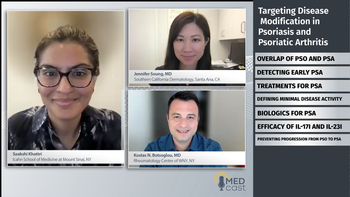
Medical experts engage in a discussion surrounding the treatment and management of patients diagnosed with psoriasis and psoriatic arthritis.

Key elements for discussion with patients around their fibromyalgia diagnosis are highlighted by a medical expert.

A key opinion leader delivers a comprehensive overview of fibromyalgia, highlighting its primary symptoms and distinguishing features from other chronic pain conditions.

Dermatologic experts explore strategies to slow the progression of psoriasis to psoriatic arthritis, offering evidence-based insights to optimize patient outcomes and enhance long-term disease management.

If approved, zasocitinib could become a leading oral treatment for PsA.

Diana Girnita, MD, PhD, highlights the crucial role of patient education, the integration of traditional and integrative medicine, and the importance of reliable information for improving health outcomes in chronic conditions.

Shai Efrati, MD, explains how his research aims to address the root cause of fibromyalgia: damaged brain tissue.

Treatment involved repairing the brain tissue using HBOT, which led to significant symptom improvement.

Amanda Mixon, PA-C, discusses how rheumatic diseases may first present in skin, ocular or gastric symptoms.

A post hoc analysis of the MIRROR trial suggests comprehensive gout management should aim for remission, incorporating both uric acid lowering and broader symptom improvements.

Data showed a significant reduction in pain for patients with psoriatic arthritis and inadequate response to TNF treated with guselkumab compared with placebo.

Treatment with guselkumab led to rapid, clinically meaningful improvements in disease activity among patients with severe psoriatic arthritis, which were maintained through 2 years.

Results revealed cDAPSA can help providers accurately measure the level of disease activity in patients and predict whether the patient will have radiographic progression.

Daniel Blockmans, MD, PhD, discussed the results of a phase 3 trial that revealed upadacitinib significantly improved outcomes in patients with giant cell arteritis.

Amanda Mixon, PA-C, discusses the need to better bridge the rheumatology and dermatology care teams due to overlapping diseases.

Karen Costenbader, MD, discusses the 2 post hoc analyses that demonstrated treatment with belimumab reduces flares and increases response rates among patients with early active SLE.

Karen Costenbader, MD, discusses how early intervention with belimumab in patients with lupus significantly reduces disease flares and prevents irreversible organ damage.

Benjamin J. Smith, DMSc, PA-C, discusses the importance of defining comorbidities in diagnosing PsA, as well as prescribing biologics.

Nigil Haroon, MD, PhD, explains how understanding the "window of opportunity" is crucial in treating axial spondyloarthritis.