
News

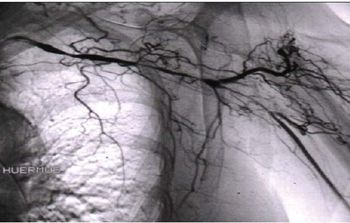
A 56-year-old woman presents with a history of intermittent shoulder pain for the past six months. Early signs point to bursitis, but the plot thickens: She also has sarcoidosis and lymphoma. How would you proceed?

(AUDIO) Intensive analysis of protein pathways inside joints is showing strong activity among messengers involved in wound healing. In this podcast, learn about the new research that backs the vision of arthritis as a chronic wound, and the implications for management.

New research suggests that obesity is not merely a physical force on the knee joint; adipose cells contribute biochemically to inflammation and pain. What are the implications for management of obese patients who need knee replacement surgery?

The largest randomized controlled trial (RCT) so far has found no benefit to arthroscopic partial meniscectomy (APM) even in patients with symptomatic meniscal tears. An editorial advises against the procedure except when physical therapy has not helped at all.

Beyond the discovery of new disease genes, revelations about how how our microbes influence our immunity and about many new subtypes of T cells--a mixture of commitment and plascticity.

Patients with rheumatoid arthritis are at considerably increased risk of asymptomatic carotid artery disease, but standard scores have proven poor predictors of their actual cardiovascular risk. Special vigilance is warranted for these patients.

Does this evidence from recent research overturn some generally accepted principles about gout, rheumatoid arthritis, reactive arthritis, and osteoarthritis? Most of these studies were undertaken in order to test ideas that were described as common wisdom in rheumatology.

A small sham-controlled trial has shown significant differences in pain processing among fibromyalgia patients who used an FDA-approved device for at-home cranial electrical stimulation. It is evidently the first study to use fMRI to test the concept.

Research published within the past year has increased and refined support for the concept that this autoimmunity may arise initially in mucosal surfaces, predominantly the lung, the oral cavity, and the digestive system, prompted by the presence of microbes.

Used for gout for centuries, colchicine is known to be peculiarly toxic at high doses. A new understanding of its potential for poisoning, deliberate or otherwise, merits attention to its often-underestimated risks.

A closer look at racial disparities in treatments for rheumatoid arthritis and osteoarthritis show nuanced explanations for why African Americans are less willing to undergo drug therapy and surgery. More careful and clearer communication may go a long way toward closing the gap.

With most medical schools devoting only a few curriculum hours to pain management training, many physicians begin their medical career underprepared to meet the needs of patients suffering with chronic pain. Here, Barry Cole, MD, identifies several key concepts that would help improve pain care in the US if only more physicians would learn about them sooner.

Recently, a group calling itself Physicians for the Responsible Opioid Prescribing proposed several radical changes to the way we treat patients with chronic noncancer pain, calling for limits on the dose and duration of opioid treatment that would in effect deny these medications to the majority of patients now receiving them for noncancer pain.

Refining the ample evidence that rheumatologists and their rheumatoid arthritis patients disagree on the severity of symptoms, new studies reported at ACR2012 point toward better definitions of disease status, and a way to identify patients for whom treatment targets may need to be reconsidered.