





Lupus
Latest News

Advertisement
Latest Videos




CME Content






















































Advertisement
More News
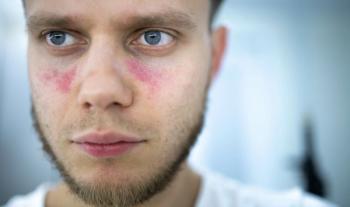
The highly encouraging results of the small study may lead to a new therapeutic approach in lupus. However, long-term safety and efficacy need to be evaluated in a larger cohort.

Take 5 minutes to catch up on Rheumatology Network's highlights from the week ending September 17, 2022.

Anne E. Winkler, MD, PhD, MACP and Kristi V. Mizelle, MD, MPH, FACR hypothesize about the role and future of a treat to target approach in patients with lupus.

Kristi V. Mizelle, MD, MPH, FACR shares her treatment goals and discusses the patient characteristics she factors when deciding on a choice of treatment for her patients.

The effect of sleep health on disease prevention may have a profound impact on women when it comes to systemic lupus erythematosus (SLE).

Investigators believe that coronary intervention, intensified medical therapy, and an aggressive risk factor optimization approach should be available to patients with rheumatic disease presenting with myocardial infarction whenever possible.
In SLE, higher doses of prednisolone and the use of immunosuppressive agents, such as cyclophosphamide, have been associated with higher rates of infective sequelae.
Take 5 minutes to catch up on Rheumatology Network's highlights from the week ending September 10, 2022.

The Lupus Research Alliance's 2022 Global Team Science Awards (GTSA) grant will provide $3 million for 3 years to each of the winners.
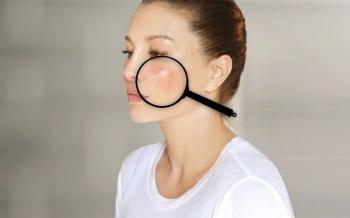
“Whether treatment with litifilimab, a humanized monoclonal antibody against BDCA2, would be efficacious in reducing disease activity in patients with cutaneous lupus erythematosus has not been extensively studied.”

"Lupus nephritis (LN) patients might suffer from mental disorders which further prolong the LN treatment duration and affect patients' quality of life.”
Take 5 minutes to catch up on Rheumatology Network's highlights from the week ending September 3, 2022.

"The high prevalence of severe infection in newly diagnosed SLE implies that infections may be related to the underlying immune disturbance of SLE itself.”
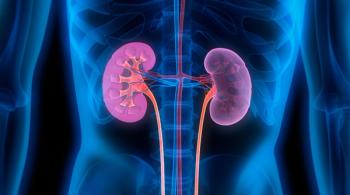
Previous renal response endpoints used in lupus nephritis trials lacked uniformity and their accuracy of long-term kidney survival prediction was questionable.

An observational cross-sectional study finds that patients suffering from such inflammatory conditions had a higher average number of missing teeth compared to the control group.

"Chronic cutaneous lupus erythematosus is prone to cause substantial disfigurement on visible skin, negatively impacting patients’ mental health and social life."
Although the role of PPIs in the occurrence of both drug-induced systemic lupus erythematosus and drug-induced cutaneous lupus erythematosus has been suggested, it remains poorly characterized.

"An unmet need is a biomarker that distinguishes active lupus nephritis, particularly important in pediatrics where minimizing invasive procedures is desirable.”
Take 5 minutes to catch up on Rheumatology Network's highlights from the week ending July 30, 2022.

Although a third dose of mRNA vaccine significantly increased antireceptor-binding domain (RBD) titer in a previous study, clinical factors associated with the immunogenicity in immunosuppressed populations have not been adequately studied.
Despite advancements over the years, cutaneous lupus erythematosus (CLE) continues to represent a high unmet medical need with no cure.

The US FDA has approved belimumab for the treatment of active lupus nephritis in children aged 5 to 17 who are currently receiving standard therapy.
Take 5 minutes to catch up on Rheumatology Network's highlights from the week ending July 23, 2022.

25% of patients presented with extensive blood-brain barrier leakage, which was linked to both cognitive impairment and shorter disease duration.

Previous assessments of the prevalence of lupus were conducted in short periods of time, therefore limiting the insight into long-term trends and potential explanations for the observed patterns.
Advertisement
Advertisement