

Patients with inflammatory arthritis are being treated for cardiovascular risk factors at rates similar to that of the general population, even though their risk is higher, study shows.
Patients with inflammatory arthritis are being treated for cardiovascular risk factors at rates similar to that of the general population, even though their risk is higher, study shows.
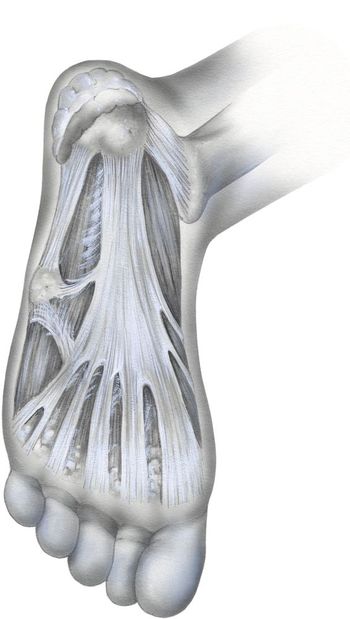
Clinical enthesitis is a common condition for some psoriatic arthritis patients who are disproportionately affected by inflammation, particularly of the Achilles tendon, plantar fascia and lateral epicondyle.

Analysis finds that those with RA have same mortality rate as those without.

Myocardial inflammation/fibrosis has been identified in a study of rheumatoid arthritis patients with no known history of heart disease.

Pre-surgical widespread body pain is associated with persistent pain in patients following total knee arthroplasty at 12 months post-surgery, researchers report.

Researchers have made an important discovery that may lead to new treatment for patients with bullous pemphigoid, a chronic autoimmune skin disease causing blisters.

Some biologics produce hypersensitivity reactions more than others, but for most, the events are low, researchers report.

Methotrexate is "dramatically" underutilized, prescribed at suboptimal levels, prescribed for too short of periods and is not administered correctly, researchers report.

Genetic risk factors for systemic juvenile idiopathic arthritis are uniquely different from other types of juvenile idiopathic arthritis, a study shows.

Vitamin D deficiency and insufficiency may be more common than you think, particularly in patients with fractures, shows a new review.
Patients fail to report adverse drug reactions due to poor awareness, but when they do speak up, it’s to prevent others from suffering.


Study supports associations between crystal deposition disease, rheumatoid arthritis and osteoporosis.

The MD Magazine editors rounded up the 10 best stories from December—did you read them all?

A rheumatoid arthritis patient seeks treatment for ankyloses, or fusion of the finger joints. The patient was successfully treated with silicone arthroplasty.

The FDA this week announced approval of Maci, “matrix-induced autologous chondrocyte implantation.†The treatment is intended for cartilage defects of the knee, which can eventually lead to osteoarthritis.

Researchers reporting at the American Society of Hematology annual meeting this week say there is a link between a treatment for autoimmune disease and the development of leukemia.
Women who have rheumatoid arthritis might benefit from treatment with denosumab over alendronate. According to a new study, denosumab is more effective at bone healing.
Doctor and patients perceive the importance of lupus medications differently. In this article, we feature a UAB-derived decision aid that highlights key considerations.

Employment status can be very telling for opioid and stimulant misuse odds, said researchers from Columbia University’s Mailman School of Public Health.
Good early management of pulmonary hypertension in patients with systemic sclerosis leads to better outcomes and fewer complications, researchers report.

Diagnosed with systemic lupus erythematosus and chikungunya, a woman embarks on a cross-continent trip for treatment and diagnosis at a city hospital.
Redefining disease remission or inactivity examined in this assessment by Laura Coates of the University of Leeds.

Researchers from the University of North Carolina examined the gene expression and regulation in colon tissue from patients to better understand the cellular and molecular mechanisms that make up Crohn’s disease.

Selective serotonin reuptake inhibitors (SSRIs), popularly used as antidepressants, can have a negative impact on bone density. Beta blockers may be able to prevent that.

Asked to assume equal cost-effectiveness, the patients were given eight facets of treatment and asked to rank them between 1 and 8, with 1 being the most important to them and 8 being the least.

A research team from the University of Delaware sought to see how much strength one would need, how fast they needed to walk, and how far they needed to walk to achieve a sufficient 6,000 steps in a day, and found that most knee OA patients surpassed their thresholds.

Researchers who evaluated adverse events in a large sample of patients taking NSAIDs for arthritis came to a surprising conclusion: celecoxib is the safest of three drugs studied.

Speaking at ACR 2016, the current chair of the Spondyloarthritis Research and Treatment Network (SPARTAN) presented data that showed that a combination of inflammatory drugs may inhibit ankylosis, the painful fusion of bones.

Certain types of inflammation go hand-in-hand. Columbia University researchers hypothesized that treatment that lowered arthritis disease activity would also decrease the risk of heart failure.