

The risk of dying from a cardiovascular event can increase by 50 percent for rheumatoid arthritis patients with low serum folate levels, report researchers in JAMA Open Network.
The risk of dying from a cardiovascular event can increase by 50 percent for rheumatoid arthritis patients with low serum folate levels, report researchers in JAMA Open Network.

The U.S. Food and Drug Administration has approved the first-ever treatment for chronic fibrosing interstitial lung disease (ILD), a condition that can affect rheumatoid arthritis patients. The treatment is designed for patients with a form of the disease that progressively worsens over time.

Digital health tools can improve physical function and serve as an alternative treatment option for patients with certain chronic conditions.

The findings can lead to new policies, procedures, and programs being implemented at health systems.

Respiratory viral infections can be a novel environmental risk factor for the development of rheumatoid arthritis, find Korean researchers writing in Arthritis Research and Therapy.

A two-pronged vaccination approach performs better than a single pneumococcal vaccination in patients receiving conventional DMARDs or abatacept-treated patients, but not in patients receiving rituximab, say researchers writing in Arthritis Research & Therapy.

Providers who care for patients with asthma or COPD need to be aware of the increased risk of rheumatoid arthritis.

The use of tramadol in older patients is associated with a higher risk of hip fracture compared with the use of codeine or commonly used nonsteroidal anti-inflammatory drugs (NSAIDs), say researchers recently writing in in the Journal of Bone and Mineral Research.

Hip replacements may not be the best choice for acute kidney injury patients, shows a new study that highlights above normal rates of death, longer hospital stays, revisions, transfusions, implant problems, above norm hospital charges; and, discharge to rehab hospitals.

Tocilizumab might be a useful adjunctive therapeutic option for children with juvenile idiopathic arthritis-associated uveitis that doesn't respond to TNFi treatment, say researchers recently writing in The Lancet Rheumatology.

The GSK-branded Advil will be available as a dual-action pain reliever later this year.

The U.S. Food and Drug Administration has approved a label update for secukinumab (Cosentyx, Novartis) to include the option for up-titration to a 300 mg dose for adults with active ankylosing spondylitis.

Adding methotrexate to adalimumab (Humira, AbbVie) in axial spondyloarthritis was associated with reduced immunogenicity, and prolonged co-medication was associated with long-term maintenance of adalimumab, say researchers recently writing in RMD Open: Rheumatic & Musculoskeletal Diseases.

Bone mineral density was preserved over a three-year period in patients with rheumatoid arthritis treated with biological/targeted synthetic disease-modifying antirheumatic drugs (DMARDS) but declined in those who received only conventional-synthetic DMARDs, say researchers recently writing in Rheumatology.

Research from the University of Texas examines how serum folate levels above or below a certain level were linked to an increase in cardiovascular mortality.

The FDA has expanded the indication of the over-the-counter pain reliever ActiPatch (BioElectronics Corp.) to include all musculoskeletal pain. Learn more about this and other recent drug approvals in this news brief.

The U.S. Food and Drug Administration has approved the use of an intravenous form of the pain reliever meloxicam (Anjeso, Baudax Bio) for the relief of moderate to severe pain.
The American College of Rheumatology have released guidelines for managing reproductive health that include 131 recommendations and 12 good practice suggestions.

A study of 312,081 pregnant women with rheumatoid arthritis, spondyloarthritis or no inflammatory arthritis, finds that women with rheumatoid arthritis are more likely to have pregnancy complications.

New this week: The American College of Rheumatology has issued treatment guidelines for the management of reproductive health in rheumatic and musculoskeletal diseases. They include 12 ungraded good practice statements and 131 graded recommendations for all female patients considering becoming pregnant.

Patients with psoriatic arthritis are not at an increased risk of cancer, however.

A double-blind, placebo-controlled, randomized clinical trial has confirmed that low-dose methotrexate is associated with an increased risk of skin cancer, according to a study published this week in the Annals of Internal Medicine.
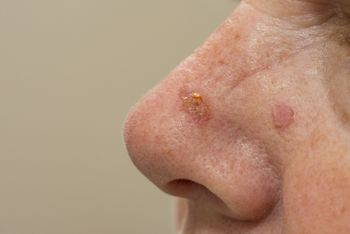
A systematic review and meta-analysis published today in JAMA Dermatology confirms that psoriasis patients have a slightly increased risk of cancer, specifically, keratinocyte cancer and lymphomas.

Patients who use methotrexate have increased risk of skin cancer, gastrointestinal, infectious, lung, and blood adverse events.
The gel is intended to relieve join pain in the hand, wrist, elbow, foot, ankle, or knee.

New treatments for rheumatoid arthritis can effectively control inflammation, but they do little to improve quality of life indicators-like fatigue-that are important to patients, shows a new study.

Long-term use of tumor necrosis factor inhibitors (TNFi) may show radiographic progression benefit in axial spondyloarthritis, say researchers recently writing in Arthritis & Rheumatology.

In a new study, investigators show belimumab as a treatment could normalize or stabilize proteinuria is patients with lupus nephritis.

The practice of systematically tapering biological disease modifying antirheumatic drugs (bDMARDs) in all patients with inflammatory arthritis who have reached a certain disease activity target may not be supported by current evidence, according to a review published recently in Autoimmunity Reviews

The internationally recommended Bath Ankylosing Spondylitis Disease Activity Index (BASDAI) cutoff of four and above may not be applicable when initiating treatment with the tumor necrosis factor alpha inhibitor (TNFi) golimumab (Simponi, Janssen), say researchers recently writing in The Journal of Rheumatology.