

(AUDIO) The primary challenge in lupus diagnosis is nonspecific signs and lack of good biomarkers, says Sam Lim, MD, of the American College of Rheumatology’s Lupus Initiative. Here he sheds light on how to arrive at an appropriate diagnosis.
(AUDIO) The primary challenge in lupus diagnosis is nonspecific signs and lack of good biomarkers, says Sam Lim, MD, of the American College of Rheumatology’s Lupus Initiative. Here he sheds light on how to arrive at an appropriate diagnosis.

The burden of cognitive impairment in persons with rheumatoid arthritis is significant, according to recent study findings.
The risks are proven. The benefits are questionable. The alternatives are numerous. So is it ever a good idea to prescribe opioids for patients suffering with chronic pain from rheumatoid arthritis?
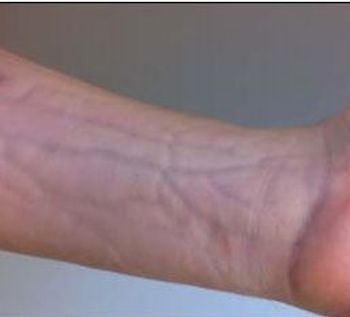
A 27-year-old white man, an active-duty soldier who previously had been healthy, presented with a 5-month history of progressively worsening swelling, pain and, eventually, skin hardening in both legs and then arms
Attention to early diagnosis and intervention in osteoarthritis (OA) has increased, but which treatments may have the greatest benefit is unclear. However, available and emerging treatments can ameliorate progression.
Anterior cruciate ligament injuries occur frequently in young and active persons.
A 54-year-old Asian woman presented with ongoing renal insufficiency and anemia that were thought to be the result of analgesic nephropathy caused by NSAIDs.
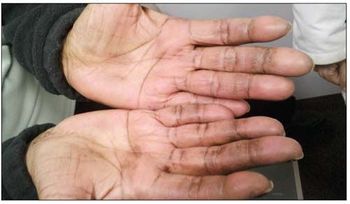
Polymyositis or dermatomyositis may be complicated with antisynthetase syndrome, which can include inflammatory muscle disease, interstitial lung disease, Raynaud phenomenon, arthritis, and other symptoms.
Patients with erosive osteoarthritis have more functional impairment and significantly more pain in the hands than patients with controlled inflammatory arthritis and patients with nonerosive OA.
Myofascial pain syndrome and fibromyalgia are common forms of musculoskeletal pain that are often confused with each other, not only because of similar symptoms, but also because they frequently occur in the same patient, which can lead to difficulties in differential diagnosis and treatment.
Psoriatic arthritis, a chronic inflammatory arthritis, usually is seronegative for rheumatoid factor and is associated with cutaneous psoriasis
Raynaud phenomenon, joint pain, muscle weakness, and hand discoloration: What is the diagnosis?
The current “treat to target” approach to rheumatoid arthritis incorporates an intensive, individualized management algorithm that includes an expanded role for the rheumatology nurse.
J.S. is a 69-year-old woman who presented with bilateral knee pain that she had had for 5 years.
Our evolving understanding of the potential causes of fibromyalgia, and its placement along a continuum of related conditions, informs an individualized treatment approach.
A 24-week randomized trial showed that quick response to the biologic adalimumab strongly predicted remission lasting for five years.
In "dry knee" osteoarthritis, intra-articular injections can't be guided by aspiration. So what's the best approach? This review ponders the options.
Posterior cruciate ligament (PCL) injuries usually result from automobile or sports collisions. When is nonoperative treatment the best option?
Anterior cruciate ligament (ACL) degeneration, associated with aging, may precede or initiate cartilage damage.
Observing rheumatoid arthritis patients in a systematic way allows rigorous analysis of pain and function. Learn how in this review.

Besides new guidelines on assessing rheumatoid arthritis, the American College of Rheumatology has updated treatment guidance. A panel member reviews the highlights.
Assessing function in patients with rheumatoid arthritis (RA) is a challenging but important part of the rheumatology office visit.
The cause of neck pain, or cervicalgia, can usually be identified by history and physical exam. Learn the provocative maneuvers and "red flag" symptoms to exclude malignancy and reveal radiculopathy or myelpathy.
The original antiphospholipid syndrome (APS) classification criteria (the Sapporo criteria), published in 1999, helped galvanize research in this disorder.1 New clinical, laboratory, and experimental insights gained since then were addressed at the Eleventh International Congress on Antiphospholipid Antibodies in Sydney, Australia, in 2006.
The presence of crystals alone in synovial fluid in patients with acute monoarthritis cannot exclude infection, because septic arthritis and crystal arthritis often coexist.
Insomnia, disordered sleep, and other sleep disturbances are frequently seen in patients with fibromyalgia, and are often associated with increased daytime fatigue and pain.
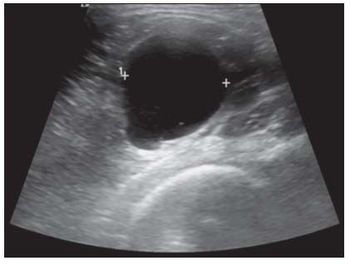
Anterior hip pain sometimes arises from iliopsoas bursitis, which may present as a groin mass. Pain may be referred to the abdomen, thigh, or knee.
Exercises to promote strengthening, conditioning, and pain control are prescribed regularly as part of the “medical armamentarium.”
Eosinophilic fasciitis (EF), also known as Shulman disease and diffuse fasciitis with eosinophilia, is an uncommon condition that often is confused with scleroderma because they have similar features.
Thirty million Americans have used cocaine, making the United States the world’s largest consumer of the substance; there are about 5 million current users.