

Here's a notice for your waiting room bulletin board: Manufacturers are recalling Reumofan Plus, an herbal supplement marketed as "100% natural," found to contain active pharmaceutical ingredients not listed on the packaging.
Here's a notice for your waiting room bulletin board: Manufacturers are recalling Reumofan Plus, an herbal supplement marketed as "100% natural," found to contain active pharmaceutical ingredients not listed on the packaging.
Beyond the discovery of new disease genes, revelations about how how our microbes influence our immunity and about many new subtypes of T cells--a mixture of commitment and plascticity.
Evidence-based analysis shows that weak opioids have at best a weak effect in rheumatoid arthritis pain. Steroid injections offer no long-term relief for tennis elbow.
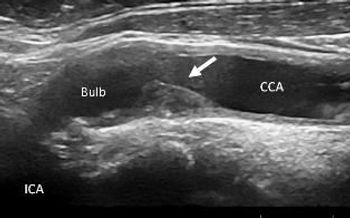
Patients with rheumatoid arthritis are at considerably increased risk of asymptomatic carotid artery disease, but standard scores have proven poor predictors of their actual cardiovascular risk. Special vigilance is warranted for these patients.
Does this evidence from recent research overturn some generally accepted principles about gout, rheumatoid arthritis, reactive arthritis, and osteoarthritis? Most of these studies were undertaken in order to test ideas that were described as common wisdom in rheumatology.
Rare systemic adverse reactions to corticosteroid injections for juvenile idiopathic arthritis are described in a review of an institution's cases and the literature.
Test your skills about the diagnosis and treatment of osteoporosis in this brief quiz offered by Nancy Lane MD.
A small sham-controlled trial has shown significant differences in pain processing among fibromyalgia patients who used an FDA-approved device for at-home cranial electrical stimulation. It is evidently the first study to use fMRI to test the concept.
Research published within the past year has increased and refined support for the concept that this autoimmunity may arise initially in mucosal surfaces, predominantly the lung, the oral cavity, and the digestive system, prompted by the presence of microbes.
Reviews describe the JAK/STAT pathway that has proven successful against rheumatoid arthritis and inflammatory conditions, and the many other pathways that govern inflammation, often to the detriment of anti-inflammatory strategies.

Used for gout for centuries, colchicine is known to be peculiarly toxic at high doses. A new understanding of its potential for poisoning, deliberate or otherwise, merits attention to its often-underestimated risks.
A closer look at racial disparities in treatments for rheumatoid arthritis and osteoarthritis show nuanced explanations for why African Americans are less willing to undergo drug therapy and surgery. More careful and clearer communication may go a long way toward closing the gap.
Does the research show any significant difference between anti-tumor necrosis factor drugs in terms of their effectiveness for treating psoriatic arthritis?

With most medical schools devoting only a few curriculum hours to pain management training, many physicians begin their medical career underprepared to meet the needs of patients suffering with chronic pain. Here, Barry Cole, MD, identifies several key concepts that would help improve pain care in the US if only more physicians would learn about them sooner.
Recently, a group calling itself Physicians for the Responsible Opioid Prescribing proposed several radical changes to the way we treat patients with chronic noncancer pain, calling for limits on the dose and duration of opioid treatment that would in effect deny these medications to the majority of patients now receiving them for noncancer pain.
The variety of mechanisms that play a part in pathologic pain perception leads to a great deal of complexity and variation in the clinical presentation and severity of fibromyalgia symptoms, as well as a high degree of variability in patient response to treatment.
Refining the ample evidence that rheumatologists and their rheumatoid arthritis patients disagree on the severity of symptoms, new studies reported at ACR2012 point toward better definitions of disease status, and a way to identify patients for whom treatment targets may need to be reconsidered.
Results presented at the American College of Rheumatology/Association of Rheumatology Professionals 2012 annual meeting show that adalimumab and methotrexate are more effective than DMARDs and prednisone in achieving remission in patients with early rheumatoid arthritis or undifferentiated arthritis patients.

The 23-year-old African American woman was concerned about discolored, tender spots on her face.
A specialist in irritable bowel disorder and other "functional" GI conditions offers advice on dealing with patients whose symptoms aren't easy to categorize. His pointers would apply as well to patients with chronic musculoskeletal pain and enigmatic rheumatologic disorders.
Among more than 5,000 rheumatoid arthritis patients followed for a quarter century, methotrexate use was associated with at least a 65% reduction in mortality risk

(AUDIO) New ACR guidelines on gout advise considering a test for the HLA-B*5801 allele linked to allopurinol sensitivity in some patients. This podcast by the co-chair of the panel clarifies the details.
Diagnosing systemic lupus erythematosus (SLE) can take 2-3 years, because most symptoms are both common and nonspecific. Here are clues to quick, accurate detection.
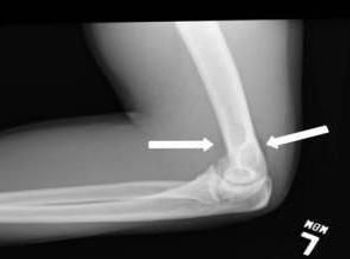
The 27-year-old patient sustained a FOOSH (fall on outstretched hand) injury while roller skating. What classic imaging sign appears on the radiograph of his injured left elbow?

The janitor began to have shoulder pain about 5 months ago, even when he wasn't moving. Also, his fingernails are clubbed.
Results of studies of systemic treatments for patients with osteoarthritis indicate significant positive effects on biomarkers that may be associated with disease progression but no significant effects on joint-space narrowing.
Involving pharmacists, physiotherapists, and primary care physicians in caring for patients with osteoarthritis improves the quality of care, along with patients' function, pain, and quality of life.
The long-term risk of rheumatoid arthritis is up to 26-fold greater and there is up to a 32% 10-year absolute risk of RA in persons in the general population who have elevated rheumatoid factor levels.
The tumor necrosis factor α antagonist infliximab has been used for treating patients with uveitis resistant to corticosteroids.
Case study: Avid runner with midfoot pain: Stress fracture? Lisfranc ligament injury? Synovitis? The description of this rare fracture of the first metatarsal bone illustrates the importance of history and investigation.