

Highest responders on DAS28 also had significantly greater decreases in 12-hydroxyeicosatetraenoic than low responders.
Highest responders on DAS28 also had significantly greater decreases in 12-hydroxyeicosatetraenoic than low responders.

Combining interventions yielded no significant differences in outcomes, pain, or quality-of-life.

Veterans residing in rural areas were only 10% more likely to initiate biologic therapies than those residing in rural areas.

The pain reduction effects did not last long beyond the scope of the trial, underscoring the importance of continuing such exercises.

SGLT-2 inhibitors had more protective effects than GLP-1 receptor agonists or DPP-4 inhibitors in this population.
A new cohort study including over 6 million participants has found an increased likelihood of Behçet disease, alocpecia, bulbous pemphigoid and other disorders post-COVID infection.

The international phase 4 MOSAIC study is the first evaluating PsAMRIS and MRI-WIPE outcomes in patients with psoriatic arthritis.

Week 156 efficacy and safety data from the FINCH 4 study are consistent with that seen in FINCH 1, 2, and 3.
The rheumatology month in review emphasizes new data on secukinumab, gout clinical decision making, and addressing sleep issues in fibromyalgia.

SF-36v2 scores also improved by 12 points with semaglutide compared with 6.5 points with placebo.
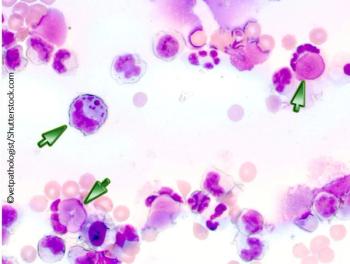
Four of 5 participants with follow-up reaching 3 months have achieved SRI-4 disease responses.

Patients exposed to screening were also more likely to receive vaccinations and consult a cardiologist and/or a pneumologist.

Malignancy-related IBP has distinct features: shorter diagnosis time, higher ESR/CRP/LDH, lower hemoglobin, and often involves metastasis or paraneoplastic causes.

Investigators analyzed antibody response after 2 SARS-CoV-2 vaccinations.

The treatment did seem to blunt the glycemic response and influence some inflammatory cytokines.

The ER fluticasone propionate intra-articular injection significantly reduced pain compared with control for up to 14 weeks.

The study also identified a tendency for more prevalent human herpesvirus 6B in people with FM than in those without.
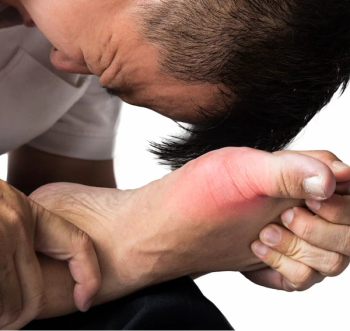
Adherence to a preventative, favorable lifestyle significantly reduced CVD risk in participants with high and low genetic risk.

Two pivotal phase 3 studies previously met their endpoints of significantly reducting daily pain compared with placebo.

The new administration options allow a single-injection option for patients that require a 320 mg dose.

Patients with IBD or arthritis were not found to be at a significantly higher risk of serious infection with a biosimilar versus originator of the common drugs.

Of patients randomized to guselkumab Q8W, 93% to 99% maintained minimally clinically important improvements in joint disease through 1 year.
A study found that high ultraprocessed food consumption increases the risk of SLE by 56%, with an even higher risk for anti-dsDNA positive SLE at 105%.

Over 70% of participants with MSK pain after COVID-19 fulfilled ACR fibromyalgia criteria in new research.

Results from INVIGORATE-2 showed IV secukinumab led to improved clinical measures of PsA, with a similar safety profile to subcutaneous secukinumab.

Secukinumab is best for severe skin involvement, while adalimumab improves synovitis in PsA. Both are effective, but larger studies are needed for long-term outcomes.

Research from Spain suggests long-term opioid use to treat fibromyalgia pain significantly raises the risk of depression, anxiety and sleep disorders in patients.

The analysis of NHANES data revealed an inverse association between dietary vitamin C intake and gout risk.
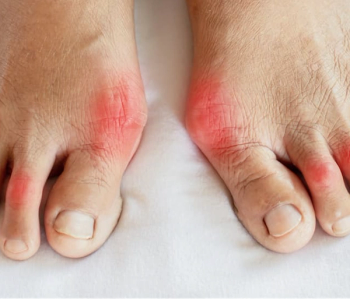
A comprehensive model of clinical and radiomic features was more accurate in distinguishing flares than either model alone.

Remission according to the simplified definition correlated with the 2016 preliminary gout remission definition and GIS score improvements.