





























































Although disease activity remains the key risk factor, this test can identify a greater predisposition to thrombosis.
Although disease activity remains the key risk factor, this test can identify a greater predisposition to thrombosis.

How high is the risk of CV disease in RA? What rare but serious complications can rheumatoid vasculitis cause? Answers here.

A wish list from your patients with rheumatoid arthritis who are-or who want to become-mothers.
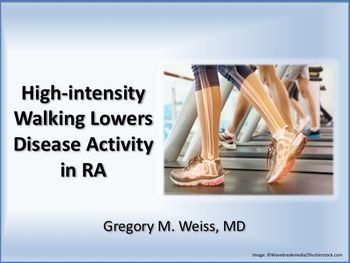
Reassure patients with RA that exercise is safe and may lead to better functional status and improved cardiorespiratory function.

Mental health is clearly tied to disease activity in RA. Here: the implications for clinical practice.
Early, intensive treatment of RA has long-term benefits, including a reduction in mortality, report Dutch researchers at EULAR 2018.
Updates from the 2018 British Society for Rheumatology conference focus on RA treatment targets and resistance to biologics.
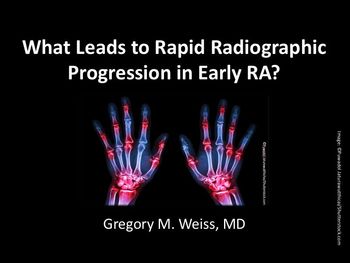
Smoking, obesity, RF and anti-CCP positivity, high disease activity, early erosions-one of these was found to protect against severe joint damage.
Consider screening patients with RA for HBV exposure/infection as a part of the pretreatment assessment.

Daily upadacitinib monotherapy 15 mg/30 mg met both primary endpoints with 52%/56% of methotrexate patients achieving ACR50 at week 12 and 48%/50% achieving clinical remission at week 24.

The approval is based on phase 3 clinical data that demonstrated efficacy for difficult to treat rheumatoid arthritis.

After rejecting the drug in 2017, the FDA approved the 2 mg dose of baricitinib (Olumiant) for adults with moderate to severe rheumatoid arthritis.

Upon unearthing rheumatoid arthritis’ epigenome, researchers at University of California San Diego School of Medicine and the Icahn School of Medicine at Mount Sinai have also discovered an overlap between the causes of rheumatoid arthritis and Huntington’s disease.

Which organs are most commonly affected? What’s the impact of RA therapies on comorbidities? Answers here.

Chew on this: periodontal disease has been linked to the development of RA.
Reassuring news for women with rheumatoid arthritis who need treatment with a TNF inhibitor during pregnancy.

Here, insights from some experts on the patient’s experience of rheumatoid arthritis.
The definition continues to evolve as newer agents are added to the armamentarium.

Role of Epstein-Barr virus in autoimmune diseases, impact of consensus treatment plans, and the search for biomarkers for juvenile arthritis.
The BLA was originally accepted by the FDA for review in September 2017, with the product intended to be used for the treatment of immunological conditions such as rheumatoid arthritis, as well as blood cancers.

Both weight loss and obesity are associated with worsening disability in RA.
The committee recommends the approval of baricitinib 2-mg, but not 4-mg; this comes a year after baricitinib was rejected by the FDA.

While its safety profile was lessened, celecoxib, in comparison with naproxen and ibuprofen, remained favorable when taken with aspirin.
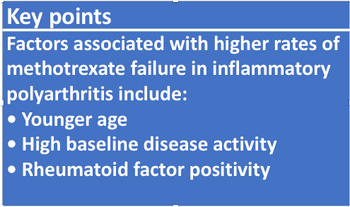
RF positive, young with high disease activity . . . a big negative for MTX success.

Do statins increase or lower the risk of rheumatoid arthritis? Researchers sorted through a host of confounding factors to arrive at an answer.