






Psoriatic Arthritis
Latest News
Advertisement
Latest Videos


CME Content






















































Advertisement
More News

The analysis determined improvement based on a variety of clinical assessments, including the Leeds Enthesitis Index (LEI), Leeds Dactylitis Index (LDI), and modified Nail Psoriasis Severity Index (mNAPSI) scores, at baseline and week 24.

Treatment with apremilast was associated with extended time to biologic initiation when compared with treatment with methotrexate.

"COVID-19 raises special concerns regarding its course and outcome among patients with IMIDs," investigators stated.

Further research examining a possible association between smoking, which was found more frequently in nADAb-positive patients, is warranted.
Novartis announces the EC expanded on the approval of secukinumab in EU to include pediatric patients with childhood arthritic conditions: juvenile idiopathic arthritis, enthesitis-related arthritis, and juvenile psoriatic arthritis.

In this Q&A, Rubén Queiro, MD, PhD, discussed the findings of his study that examined the variables associated with achieving minimal disease activity in patients with recent-onset psoriatic arthritis.

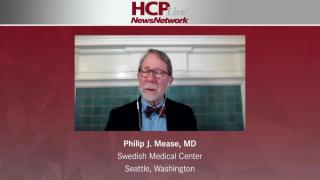
Dr. Philip Mease explains that it's a good time to be treating psoriatic arthritis after results from a clinical trial show that guselkumab provided continuous improvement across measures of health-related quality of life.

Take 5 minutes to catch up on Rheumatology Network's highlights from the week ending July 2, 2022.

With guselkumab, patients with active psoriatic arthritis achieved efficacy that was sustained through a 2 year clinical trial. Results show that the treatment offered continuous improvement across measures of health-related quality of life.

“The differential contribution of IL-6 and IL-17 pathways to the pathogenesis of psoriatic arthritis is not fully understood,” investigators stated.

Take a few minutes to check out Rheumatology Network's top expert interviews from Q2 2022.

The approvals were based on results from the JUNIPERA trial, which showed secukinumab reduced the risk of flare and disease activity when compared with placebo over 2 years in pediatric patients with ERA and JPsA.

New research suggests patients with psoriatic arthritis were at 8 times greater risk of sexual dysfunction and patients with rheumatoid arthritis were at 10 times greater risk when compared to their counterparts without either rheumatic disease.

The use of biological DMARDs was similar across countries, but in less wealthy countries, more patients with moderate/high disease activity were not receiving biologics.
Take 5 minutes to catch up on Rheumatology Network's highlights from the week ending June 11, 2022.

Frédéric Lavie, MD, PhD, explains the results of the data presented at EULAR evaluating guselkumab for the treatment of psoriatic arthritis.
Terence Rooney, MD, explains the innovative research methods that Janssen utilizes and the benefits of precision medicine in the treatment of psoriatic arthritis.
Terence Rooney, MD, discusses recent findings indicating that guselkumab provided patients with psoriatic arthritis with sustained improvements in health-related quality of life through 2 years.

Line Uhrenholt, MD, discusses the results of her randomized, open-label, equivalence trial study evaluating disease activity-guided tapering of biologics in patients with inflammatory arthritis.
A personal history rather than a family history of psoriasis is associated with the disease activity and severity of axial joint damage.

Nicola Luigi Bragazzi, MD, PhD, explains the importance of sex-based medicine in psoriatic arthritis and shares his advice for future studies.

Catch up on Rheumatology Network's top articles of May 2022.
Take 5 minutes to catch up on Rheumatology Network's highlights from the week ending May 28, 2022.

Investigators conducted a meta-analysis to determine the association between psoriasis and an eventual psoriatic arthritis diagnosis.

Two phase 3 studies, BE OPTIMAL and BE COMPLETE, evaluated bimekizumab in adults with active psoriatic arthritis who were biologic-naïve and TNF-inadequate responders.
Advertisement
Advertisement