Articles by Katie Robinson

The practice of systematically tapering biological disease modifying antirheumatic drugs (bDMARDs) in all patients with inflammatory arthritis who have reached a certain disease activity target may not be supported by current evidence, according to a review published recently in Autoimmunity Reviews

The internationally recommended Bath Ankylosing Spondylitis Disease Activity Index (BASDAI) cutoff of four and above may not be applicable when initiating treatment with the tumor necrosis factor alpha inhibitor (TNFi) golimumab (Simponi, Janssen), say researchers recently writing in The Journal of Rheumatology.

Neither intermittent nor daily dosing of vitamin D alone was associated with reduced risk of fracture, but daily supplementation with both vitamin D and calcium showed promise in a study recently published in JAMA Network Open.
Neither intermittent nor daily dosing of vitamin D alone was associated with reduced risk of fracture, but daily supplementation with both vitamin D and calcium showed promise in a study recently published in JAMA Network Open.

Women with rheumatoid arthritis who adhered to a defined program involving diagnostic, therapeutic, and prenatal care recommendations restored the risk of adverse pregnancy outcomes to that expected in the general population, say researchers recently writing in Arthritis Care & Research.

Disease activity measures still don’t appear to be entirely aligned with patient perceptions of pain and disease activity, shows a study featured in today’s news roundup. Researchers writing in Rheumatology say that condition improvements seen in objective measures of rheumatoid arthritis (RA) disease activity over the past three decades, do not match improvements in patient reported outcomes such as mental health, functional disability, overall disease activity, pain and vitality/fatigue. Learn more about this and other recently published studies on rheumatoid arthritis.

In patients with moderate to severe systemic lupus erythematosus (SLE), anifrolumab (AstraZeneca) was superior to placebo for improving overall disease activity, skin disease and oral corticosteroid tapering, say researchers writing in the New England Journal of Medicine.

There is insufficient evidence to support long-term effects on pain and functioning of low-dose radiation therapy for hand and knee osteoarthritis, say researchers writing in The Lancet Rheumatology.

Simple hip motion tests and observing for pain during that motion were helpful in identifying patients most likely to have hip osteoarthritis on plain radiography, say researchers recently writing in the Journal of the American Medical Association.

In patients with seropositive rheumatoid arthritis, high-dose trivalent inactivated influenza vaccine (HD-TIV) is safe and more immunogenic than standard-dose quadrivalent influenza vaccine (SD-QIV), say researchers writing in The Lancet Rheumatology.

Probiotic supplementation using a mix of three Lactobacillus strains naturally occurring in the human gut microbiota protects against lumbar spine bone loss in healthy, early postmenopausal women, say researchers recently writing in The Lancet Rheumatology.
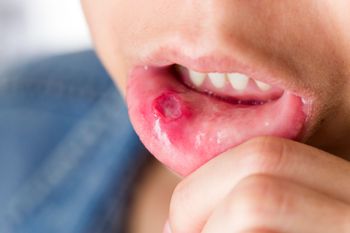
Apremilast (Otezla, Celgene) resulted in a greater reduction in the number of oral ulcers associated with Behçet’s syndrome than placebo, say researchers recently writing in the New England Journal of Medicine.

How strong is the familial link in rheumatoid arthritis? The answer may surprise you. Test your knowledge in this quiz.

The JAK inhibitor upadacitinib was approved last August for the treatment of moderate to severe rheumatoid arthritis. In this quiz, we focus on findings from a recent phase three clinical trial that tested different doses of this new oral medication. Test your knowledge of upadacitinib in this quiz.

In this slideshow, we feature results from some noteworthy rheumatoid arthritis studies that were recently published: improved patient-reported outcomes in refractory rheumatoid arthritis with use of a JAK inhibitor, mortality risk with coronary microvascular dysfunction similar in rheumatoid arthritis and diabetes, prescriber preference affects the length of time a patient takes a conventional synthetic DMARD before switching to a biologic DMARD, and more.

Treatment with the recently approved oral, selective JAK-1 inhibitor upadacitinib (Rinvoq, AbbVie) resulted in significant improvements in various patient-reported outcomes among individuals with rheumatoid arthritis who have had inadequate responses to biologic DMARDs, researchers report in Arthritis Research & Therapy.

Turkish researchers are reporting the results of small study that shows too much vitamin D may be associated with the severity of in disease ankylosing spondylitis patients. Learn more about this and other recent findings from spondylarthritis research in today's news roundup.

In patients with ankylosing spondylitis receiving treatment with non‐steroidal anti‐inflammatory drugs (NSAIDs), timely therapeutic strategies should be implemented in order to manage gastrointestinal risk, say researchers recently writing in the International Journal of Rheumatic Disease.

Secukinumab (Cosentyx, Novartis) provided sustained improvements through five years in the signs and symptoms of psoriatic arthritis with no new safety signals, say researchers recently writing in ACR Open Rheumatology.

The U.S. Food and Drug Administration has approved rituximab (Rituxan, Genentech) for the treatment of granulomatosis with polyangiitis (GPA) and microscopic polyangiitis (MPA) in children 2 years of age and older in combination with glucocorticoids, to fulfil an unmet medical need for these rare and serious diseases in children.

Nearly one third of patients with systemic lupus erythematosus use prescription opioids, with around two thirds of those using opioids for more than a year, while emergency department use is associated with increased prescription opioid use, say researchers writing in Morbidity and Mortality Weekly Report in Septmeber.

A Quality Improvement (QI) method called Lean A3 helped improve and sustain opioid prescribing within an ambulatory rheumatology clinic, say researchers writing in ACR Open Rheumatology last month.

A new discontinuation strategy for infliximab in patients with rheumatoid arthritis, in which the biologic dose was determined by the serum level of tumor necrosis factor (TNF)-α, was unsuccessful for sustained biologic-free remission, say researchers recently writing in Annals of the Rheumatic Diseases.

Children with inflammatory bowel disease, juvenile idiopathic arthritis, and chronic noninfectious osteomyelitis who were treated with TNF inhibitors had a higher rate of incident psoriasis than those not exposed to these biologics, say researchers recently writing in Arthritis Care & Research.

While the need for orthopedic surgery and the presence of uveitis have diminished over the past 20 years in children with juvenile idiopathic arthritis (JIA), disease activity is present more than 50 percent of the time, say researchers recently writing in Arthritis Research and Therapy.

Patients with rheumatoid arthritis who are physically active are less likely to report cognitive difficulties, say researchers recently writing in ACR Open Rheumatology.

Ultra-low doses of rituximab (Rituxan, MabThera) used as maintenance treatment for rheumatoid arthritis in patients who responded well to this agent did not show non-inferiority, but could nevertheless be considered in clinical practice, say researchers recently writing in The Lancet Rheumatology.

Postmenopausal women who participate in vigorous physical activity have a lower risk of total and hip fractures, but higher knee fracture risk, say researchers recently writing in JAMA Network Open.
Postmenopausal women who participate in vigorous physical activity have a lower risk of total and hip fractures, but higher knee fracture risk, say researchers recently writing in JAMA Network Open.

More than half of rheumatoid arthritis patients had persistent moderate-to-high disease activity after six months of treatment with a conventional synthetic disease-modifying anti-rheumatic drug (csDMARD), and less than a third had their therapy escalated, indicating that there is considerable need for a treat-to-target approach to care for these patients, say researchers recently writing in Clinical Rheumatology.