
Commentary|Videos|June 10, 2026
Early Joint Clearance With Bimekizumab Leads to Durable Disease Control in PsA
Author(s)Laure Gossec, MD, PhD
Fact checked by: Victoria Johnson
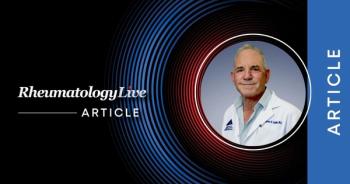
Laure Gossec, MD, PhD, discusses new research showing early responders maintain greater patient-reported outcome improvements through year 3.
Advertisement
Patients with
Investigator Laure Gossec, MD, PhD, Professor of Rheumatology at Sorbonne Université and Pitié-Salpêtrière Hospital, Paris, presented the data and sat down with RheumatologyLive during the meeting to discuss how it might impact practice. The analysis pooled data from BE OPTIMAL (bDMARD-naïve patients; NCT03895203) and BE COMPLETE (TNF inhibitor–inadequate response [TNFi-IR] patients; NCT03896581), both of which assessed subcutaneous bimekizumab 160 mg every 4 weeks (Q4W), with placebo patients switching to bimekizumab at week 16. Patients completing the parent studies entered the BE VITAL open-label extension (NCT04009499), in which all patients received bimekizumab 160 mg Q4W. Patients randomized to bimekizumab at baseline were classified as rapid responders or non-responders based on achievement of SJC = 0 or ACR50 at week 16. The analysis included 431 bDMARD-naïve and 267 TNFi-IR patients. Patient-reported outcomes (PROs) included Pain50 (≥50% improvement from baseline in pain visual analogue scale [VAS]), FACIT-Fatigue minimal clinically important difference (MCID; ≥4-point improvement from baseline in patients with FACIT-Fatigue ≤48 at baseline), and PsAID-12 total score remission (score ≤1.15).1
At week 16, SJC = 0 was achieved by 48.3% of bDMARD-naïve and 45.9% of TNFi-IR patients (modified non-responder imputation [mNRI]); ACR50 was achieved by 44.8% and 43.5%, respectively.1
Among bDMARD-naïve patients, SJC = 0 responders at week 16 achieved Pain50 at year 3 at a rate of 64.9% versus 47.4% for non-responders (mNRI). In TNFi-IR patients, the corresponding rates were 80.1% versus 50.9%. FACIT-Fatigue MCID at year 3 was achieved by 51.3% versus 42.9% in bDMARD-naïve patients and 62.3% versus 51.6% in TNFi-IR patients. PsAID-12 remission at year 3 was achieved by 51.4% versus 36.8% in bDMARD-naïve and 57.4% versus 37.2% in TNFi-IR patients.1
ACR50 responders at week 16 showed even more pronounced separations in PRO outcomes at year 3. Pain50 was achieved by 78.8% versus 33.3% in bDMARD-naïve patients and 76.5% versus 44.2% in TNFi-IR patients (mNRI). PsAID-12 remission rates were 65.4% versus 25.5% in bDMARD-naïve and 57.4% versus 30.2% in TNFi-IR patients. FACIT-Fatigue MCID was achieved by 50.8% versus 42.3% in bDMARD-naïve and 63.3% versus 46.7% in TNFi-IR patients.1 The authors note that Pain VAS is a component of the ACR response criteria, which may contribute to the stronger PRO separation observed in ACR50 versus SJC = 0 stratification.1
"Those patients who do respond extremely well, extremely rapidly — I think we can feel more comfortable with them, because they will probably maintain this response over time, and therefore it's very reassuring for us as physicians," Gossec said.
Gossec noted that the analysis raises 3 possible interpretations of the early response signal: that powerful early inflammation blockade itself confers durable benefit; that early responders represent a biologically distinct patient phenotype with lower tissue-level inflammation; or some combination of both. She emphasized that the data should not be used to justify early discontinuation in patients who do not achieve deep early response, as many such patients continue to improve with ongoing treatment. Furthermore, post hoc design and potential confounding factors should be considered when interpreting these findings.1
Gossec’s disclosures include AbbVie, Amgen, Bristol Myers Squibb, Celltrion, J&J, Eli Lilly, MSD, Novartis, Oruka, Pfizer, Takeda, UCB, AbbVie, Biogen, Eli Lilly, Novartis, and UCB
References
Gossec L, Gladman D, Husni ME, et al. Bimekizumab treatment resulted in rapid response that was associated with clinically important improvements in patient-reported outcomes up to 3 years in patients with psoriatic arthritis [abstract POS0498]. Ann Rheum Dis. 2026;85(suppl 1). doi:10.1136/annrheumdis-2026-eular.B.3123
Coates LC, Soriano ER, Corp N, et al. Group for Research and Assessment of Psoriasis and Psoriatic Arthritis (GRAPPA): updated treatment recommendations for psoriatic arthritis 2021. Nat Rev Rheumatol 18, 465–479 (2022). https://doi.org/10.1038/s41584-022-00798-0
Advertisement
Related Content
Advertisement


Latest CME




































































Advertisement
Advertisement