

Mease discussed his hopes for the new approval's impact on the fibromyalgia field.
Mease discussed his hopes for the new approval's impact on the fibromyalgia field.

The approval makes guselkumab the first and only IL-23 inhibitor approved for these pediatric indications and was based on data from the phase 3 PROTOSTAR study.

Risankizumab shows significant and lasting improvements in psoriatic arthritis symptoms, addressing multiple disease domains and enhancing patient quality of life.

Upadacitinib reduced glucocorticoid doses and improved disease activity over 104 weeks.

Study data favored the placebo group, although differences were not clinically meaningful.
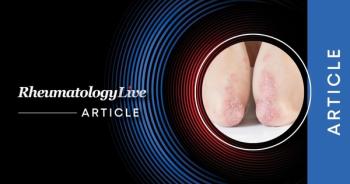
A new meta-analysis has contrasted the association between the 2 conditions against the general population, psoriasis, rheumatoid arthritis, and ankylosing spondylitis.

Nearly a third of patients with lupus in APPEAL reported falls, with disease activity, depressive symptoms, and medication use among key risk factors.

Compared with non-use, taking semaglutide or tirzepatide was associated with improved rheumatoid arthritis disease activity and cardiovascular risk.

The investigational therapy from Innovent Biologics, Inc. displayed significantly greater urate-lowering efficacy versus febuxostat, along with a favorable safety profile.



Combining golimumab with methotrexate reduced corticosteroid reliance and maintained efficacy in psoriatic arthritis.
The rheumatology month in review emphasizes new approvals and best-in-class efficacy data.

The FDA has approved the therapy, marketed as Wayrilz, a new treatment for chronic immune thrombocytopenia.

Regeneron is planning a BLA submission for the first quarter of 2026.

This FDA News Month in Review provides a round-up of regulatory decisions from August 2025.

Santerus AG is preparing to initiate clinical trials of its blood purification technology in a variety of indications.

Despite high cardiovascular risk with the 2 comorbidities, no beneficial effect was seen with colchicine.

In this feature, 3 experts discuss the management of 2 overlapping conditions: psoriasis and psoriatic arthritis.

A recent study reveals gout patients face higher chronic opioid prescription rates.

Rosnilimab shows promising long-term efficacy in treating moderate-to-severe rheumatoid arthritis.

Allopurinol and febuxostat, recently associated with significant risk of macrovascular disorders, have no increased risk of microvascular conditions.

DRESS-PS extension study shows patients maintaining low disease activity while gradually reducing TNF inhibitor doses over 24 months.
The therapy, marketed as Tonmya, is a sublingual formulation of cyclobenzaprine HCl.

Findings from the prospective feasibility study support further evaluation of the 6-week home-based stretching program in a randomized controlled trial.

Using an established full and simplified definition, investigators found a substantial percentage of the MIRROR population achieved gout remission.

Sarilumab 200 mg every 2 weeks with a 14-week glucocorticoid taper significantly boosted patient-reported outcomes versus placebo in polymyalgia rheumatica.

Targeting changes in foot progression angle to maximally reduce knee loading led to greater reductions in medial knee pain and knee adduction moment peak.
SetPoint Medical's FDA-approved device offers a new neuroimmune therapy for rheumatoid arthritis, enhancing treatment options without immune risks.