

The effect of sleep health on disease prevention may have a profound impact on women when it comes to systemic lupus erythematosus (SLE).
The effect of sleep health on disease prevention may have a profound impact on women when it comes to systemic lupus erythematosus (SLE).

For the second annual Interstitial Lung Disease Day, Dr. Briana DiSilvio expands on the background of ILDs and the latest care practices.

The updated guidelines highlight new recommendations for medications, flexibility in drug selection, and sequential therapy.

Inflammatory bowel disease, including Crohn's disease and ulcerative colitis, frequently co-occurs with the immune-mediated inflammatory condition, psoriasis.

Investigators believe that coronary intervention, intensified medical therapy, and an aggressive risk factor optimization approach should be available to patients with rheumatic disease presenting with myocardial infarction whenever possible.
New mothers are understandably nervous about taking medication while breastfeeding. Which treatments are appropriate for breastfeeding women with rheumatoid arthritis? Test your knowledge with this quiz.

In this Q&A, Tamara van Hal, MD, discussed the findings of her study that evaluated the extent of work and activity impairment in patients with psoriatic arthritis and examined determinants associated with this impairment.

In SLE, higher doses of prednisolone and the use of immunosuppressive agents, such as cyclophosphamide, have been associated with higher rates of infective sequelae.

A study presented at ASBMR 2022 leveraging data from more than a dozen countries details trends in hip fracture incidence and projects potential incidence increases by 2050.

Take 5 minutes to catch up on Rheumatology Network's highlights from the week ending September 10, 2022.

The Lupus Research Alliance's 2022 Global Team Science Awards (GTSA) grant will provide $3 million for 3 years to each of the winners.

“Whether treatment with litifilimab, a humanized monoclonal antibody against BDCA2, would be efficacious in reducing disease activity in patients with cutaneous lupus erythematosus has not been extensively studied.”
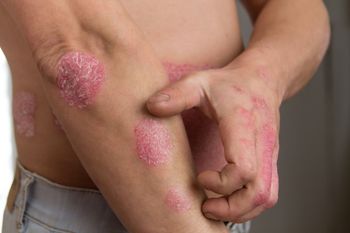
In the prospective, non-interventional SUSTAIN study, patients with active psoriatic arthritis received ustekinumab for 3 years in routine clinical care.

“Kinesiophobia plays a major role in the onset, persistence, and exacerbation of chronic disability in a variety of musculoskeletal disorders."

"Lupus nephritis (LN) patients might suffer from mental disorders which further prolong the LN treatment duration and affect patients' quality of life.”
Can women with rheumatoid arthritis (RA) continue their treatment if they become pregnant or should they stop or change therapy to protect their unborn child? Test your knowledge with this quiz.

Rheumatology Network's month in review spotlights the most popular content from the past month.
Take 5 minutes to catch up on Rheumatology Network's highlights from the week ending September 3, 2022.

"The high prevalence of severe infection in newly diagnosed SLE implies that infections may be related to the underlying immune disturbance of SLE itself.”

"Sex may play an underlying role in driving the mechanisms of psoriatic arthritis, leading to different clinical manifestations of the disease," investigators theorized.

Fibromyalgia patients have 3 times the rate of depression compared with those without the condition and more than 50% of patients with fibromyalgia experience lifetime depression.

"Comprehensively defining the risk of melanoma associated with low-dose methotrexate is important for clinicians across several medical disciplines."
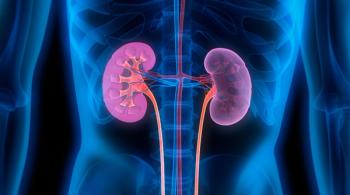
Previous renal response endpoints used in lupus nephritis trials lacked uniformity and their accuracy of long-term kidney survival prediction was questionable.

Machine learning algorithms identify patterns without being explicitly programmed to do so, which allows for unbiased discoveries.

Although effective therapies are crucial, adverse events, financial burden, and other factors make a "taper-to-target" approach appealing to both pediatric patients and their caregivers.

Although investigations have been performed on the association between inflammatory conditions and cardiovascular events, the effect of different conditions on cardiovascular diseases has not been analyzed on a large scale.
Take 5 minutes to catch up on Rheumatology Network's highlights from the week ending August 27, 2022.

"This risk-to-benefit profile has a different connotation for patients because, although a therapy may improve certain aspects of their disease, it may also have a substantial impact on their quality of life.”
Rheumatology Network interviewed Paul M. Peloso, MD, MSc, Chief Medical Officer at Acelyrin, to discuss recent phase 2 data examining the safety and efficacy of izokibep in the treatment of psoriatic arthritis.

Demographic factors and comorbidities are associated with death related to COVID-19 in the general population and in people with rheumatic diseases, including gout.