
Fibromyalgia patients who don't respond to Lyrica (pregabalin) may see their pain scores significantly improve after adding Savella (milnacipran) to their treatment regimens.
Fibromyalgia patients who don't respond to Lyrica (pregabalin) may see their pain scores significantly improve after adding Savella (milnacipran) to their treatment regimens.

One reason no good solution yet exists for osteoarthritis may be that rheumatology has been viewing many disease processes as a single entity. In an editorial, four rheumatologists offer a new disease model that they hope will rationalize future clinical research.
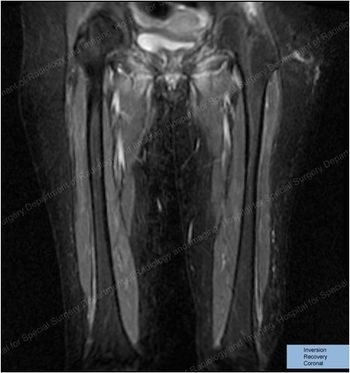
This case and a bonus set of images from another woman with the same diagnosis reveal some of the many manifestations of her condition. Can you guess her diagnosis?
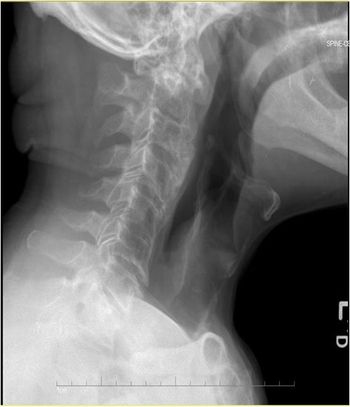
The elderly man with hypertension and polyarticular tophaceous gout experiences intermittent dizziness, neck pain, and arm weakness. Which condition is responsible?
An 82-year-old man with hypertension and gout developed periods of dizziness, neck pain, and arm weakness. Could the gout be responsible?
An international panel of rheumatologists issues new recommendations for the diagnosis and management of gout -- hoping to improve often uneven and suboptimal patient care that exists despite numerous care guidelines and new therapies.

Evidence from animal and human studies supports efforts to use the natural lubricant proteoglycan 4 (lubricin) to protect joints threatened by injury or disease, primarily osteoarthritis. The only thing wanted now is clinical proof of the concept. Gregory Jay MD PhD reviews the history and the potential of this new strategy.
Though recent reviews were unable to provide evidence of efficacy for several complementary treatments for rheumatoid arthritis (RA), a group of researchers decided to clinically evaluate the effectiveness of static electric field therapy by high voltage alternating current (EF-HVAC) in the chronic inflammatory autoimmune disorder.

Progressive multifocal leukoencephalopathy (PML) is a rare but potentially fatal adverse effect of biologic therapy for rheumatologic disorders. Here, a specialist on the topic from Cleveland Clinic offers a brief review of the risks and realities.
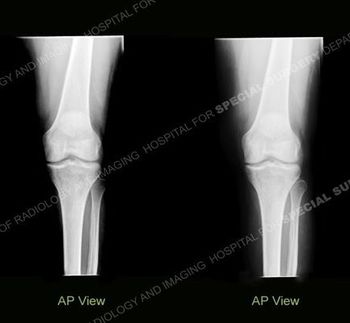
Images taken 7 months apart show subtle densities of the left knee that has been causing pain. The woman also has subluxation of the fingers, without erosion.
New this week in the nonspecialty journals: Tattoos and sarcoidosis, oral ulcers and autoimmunity, gout and heart disease, and a review about a gene that affects autoimmune inflammation.

Patients with knee or shoulder pain often take it for granted that their damaged joint needs fixing, says this author. Preventing unnecessary surgery may begin with doctors who recognize and correct this misconception.
A 45-year-old woman presented with longstanding left knee pain. Both knee and hand radiographs showed abnormalities. Bony infarcts had become complicated by an infection/septic joint and had progressed to frank bony destruction.

Returning from the Phillipines, the patient came to the clinic with atraumatic right knee swelling and loss of range of motion. He arrived in a wheelchair. He had osteoarthritis, but denied any constitutional symptoms. Joint aspiration produced grossly milky white pus. What's going on?
EULAR 2013: Data to support effectiveness of a new biomarker test for rheumatoid arthritis that is already on the market have now been reported in a public presentation.
A third of their multiple sclerosis patients without rheumatic conditions tested positive for autoantibodies. These neurologists say their routine use in MS diagnosis is unwarranted.
Psoriasis is the most common autoimmune disease, and an important manifestation of psoriatic arthritis in patients with joint pain. Try out this compact slide show to hone your skills at differential diagnosis.
EULAR 2013: Two-year data from a head-to-head comparison of abatacept and adalimumab show them comparably effective for rheumatoid arthritis. But the former is less costly with fewer noteworthy adverse effects.
The manifestations of granulomatosis with polyangiitis varies widely. This case study describes a 49-year-old man who presented with cough, chills, and chest pain who had a mediastinal mass and ocular involvement.
EULAR 2013: Your assignment for patients who have ankylosing spondylitis and psoriatic arthritis: Partner with them as they strive for a normal life, says an expert task force.
EULAR 2013: A study analyzing levels of physical activity in rheumatoid arthritis patients finds that being sedentary does not generally correlate with common signs of physical disability.
EULAR 2013: More fuel for the debate about hyaluronic acid injections for knee osteoarthritis. A small randomized trial finds that supplementing them with a jab of botulinum toxin (Botox) may significantly increase their effectiveness.
Data from a national registry of ankylosing spondylitis reveal that patients not finding relief from one THF inhibitor usually benefit from trying a different one.
In a new revision of its 2009 guidelines on knee osteoarthritis, the American Academy of Orthopaedic Surgeons reverses a formerly noncommital stance on intra-articular hyaluronic acid injections, now deeming the weight of evidence insufficient to support their efficacy.

Dr. Lim discusses the challenges of diagnosing and treating lupus, the tools and resources offered by the Lupus Initiative, and the impact of unconscious bias on care.

Merck & Co. has ceased development of its experimental therapy for Parkinson's disease after the drug failed to show superiority to placebo in initial data from a series of phase III clinical trials.
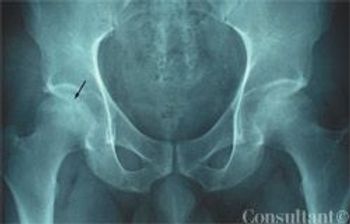
Does the lupus patient have comorbid age-related osteoarthritis? Is it iliopsoas bursitis or trochanteric pain syndrome? Eight images with reflections on differential diagnosis of hip pain.
A phase I pharmacokinetic clinical trial shows that escalating doses of oral treprostinil diethanolamine temporarily improve cutaneous perfusion and temperature in scleroderma patients with peripheral vascular disease and digital ulcers.
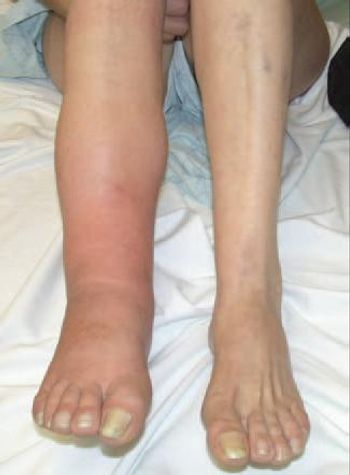
Like so many inflammatory conditions, complex regional pain syndrome (yes, there's growing evidence it's inflammatory) demands early treatment. Yet it is devilishly difficult to recognize its initial stages. Here are the signs, and an algorithm for management.
New in the nonspecialty journals: A new option for patients with autoimmune disease and HCV infection. The value of combined therapy for osteoporosis. Prognosis predictors for chronic pain, a new opioid adverse effect, and more ...