

People with fibromyalgia may try different pharmacologic approaches, but which one is really the most effective?
People with fibromyalgia may try different pharmacologic approaches, but which one is really the most effective?

A new study found that combining two well-known medications for fibromyalgia is better than either therapy on its own.

The choice of a biologic agent for treating rheumatoid arthritis (RA) may influence a patient’s risk of serious infections.

Biosimilars will play an important role in treating rheumatic diseases and "rheumatologists will be at the forefront," write the authors of a new review in ARD.

The practice of medicine moves pretty fast, leaving little time for doctors to involve themselves with insurance, paperwork and office business processes. Of course, quality doctors and nurses are critical to excellent patient care. But without the right office staff, your practice could quickly be sent into a tailspin.

The first study to investigate the link between fibromyalgia and stroke risk revealed telling results across all ages and sexes.
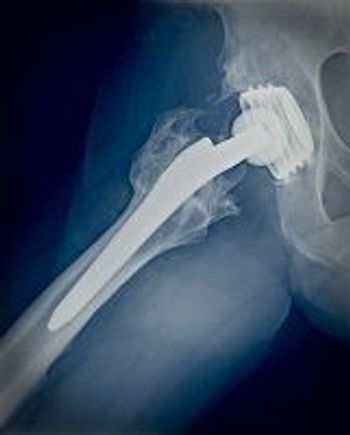
A study presented at AAOS 2016 finds an elevated risk of complications from total hip replacement for ankylosing spondylitis patients.

Rheumatoid arthritis, psoriatic arthritis and ankylosing spondylitis are linked with an increased risk of complications from total knee arthroplasty, AAOS 2016 study finds.
In my last post, I discussed the characteristics that good nurses possess that enable them to make a positive impact on a patient’s care experience. Unfortunately, bad nurses can make a significant negative impact on patient care—sometimes even more profoundly.

The results of three Phase III trials indicate that ixekizumab is a safe and effective short term treatment for people with moderate-to-severe plaque-type psoriasis, according to a recent review of the existing literature.

Fibromyalgia and sexual dysfunction are both conditions that affect more women than men; and now it looks like those who have the former are more likely to have the latter – especially if they have depression or anxiety.

Synovectomy could lead to more complications in RA patients after total knee arthroplasty, shows a study presented at the 2016 American Academy of Orthopaedic Surgeons annual meeting in Orlando this week.

In this Q&A, Dr. Saag discusses the status of prednisone to treat rheumatoid arthritis, new treatments for osteoporosis and more.

The Rheumatology Journal Club will explore the connection between polymyalgia rheumatic, giant cell arteritis (GCA) and the varicella-zoster virus during its Feb. 25 Twitter chat.

For rheumatology patients, opioids have more immediate risks than addiction, says the University of Michigan's Daniel Clauw, M.D., in an interview with Rheumatology Network.
By advocating, providing education and keeping an eye out for red flags, excellent nurses can play a critical role in keeping patients safe and healthy. Here are some ways that nurses help doctors to do their jobs better.

When more and more women with fibromyalgia began seeking care for pelvic pain syndromes, researchers from Oregon Health & Science University set out to examine the connection in a larger group of patients.
The Health Insurance Portability and Accountability Act (HIPAA) started out as a good idea. But, many medical professionals have started to read too far into HIPAA, making doctors’ jobs more difficult and, in some cases, affecting current and future patient care.

Research points to evidence showing that microorganisms inside our bodies could play a role in the development of arthritis, but it could also be a new therapeutic pathway.

To be young and African-American with a connective tissue disease, such as rheumatoid arthritis, means possibly facing a greater risk of developing some types of heart disease.

The lack of patient-doctor communication about osteoarthritis symptoms leaves patients in quandary about their condition, a study shows.

Blood analysis in patients with inflammatory rheumatic diseases such as psoriatic arthritis indicates that biologic medications do not reduce the efficacy of anti-pneumococcal polysaccharide vaccine, and that patients with such conditions may not need to be vaccinated more frequently than others.

Foot orthoses and rocker soles can reduce pressure under the first metatarsophalangeal joint associated with osteoarthritis.

Anemia could increase the prevalence of restless legs syndrome in patients with lupus.

In early rheumatoid arthritis, disease activity and pain do not necessarily occur in parallel.

A recent study showed that a large number of surgeons in the United States are reaching retirement age with no plans to put down their scalpel. What this can mean to the patients they treat has yet to be determined.

Biologic drug secukinumab (Cosentyx/Novartis), already FDA approved in January 2015 to treat chronic plaque psoriasis, has now been approved for two new indications: the treatment of active ankylosing spondylitis (AS) and active psoriatic arthritis (PsA).

A new patient registry analysis assessed whether there were any significant differences in outcome between combination therapy and monotherapy in patients with psoriatic arthritis.

Author of the recent vitamin D study in JAMA Internal Medicine discusses whether less is really more when it comes to vitamin D intake.
Graded drug challenges are considered the gold standard for evaluating patients with a low-risk history of a prior adverse drug reactions – like a mild rash or unknown reaction to penicillin as a child.