

Findings will be presented at the EULAR Annual Meeting and show significantly more bimekizumab-treated patients achieved the 16 week ACR50 primary endpoint.

Abigail Brooks is an assistant managing editor for HCPLive. She joined MJH Life Sciences in August 2023 shortly after graduating from Monmouth University where she earned her BA in Communication with a concentration in Public Relations/Journalism and later an MA in Interactive Digital Media. She enjoys traveling, running, and reading books. She can be reached at abrooks@mjhlifesciences.com.
Findings will be presented at the EULAR Annual Meeting and show significantly more bimekizumab-treated patients achieved the 16 week ACR50 primary endpoint.

The FDA approved anifrolumab via a once-weekly subcutaneous autoinjector for moderate to severe SLE based on phase 3 TULIP-SC trial results.


In a phase 3 trial, the first-in-class triple agonist delivered up to an average of 71.2 lbs weight loss and reduced WOMAC pain scores for knee osteoarthritis.

The decision is supported by positive results from the phase 2 NOBILITY and phase 3 REGENCY studies.
The approval makes guselkumab the first and only IL-23 inhibitor approved for these pediatric indications and was based on data from the phase 3 PROTOSTAR study.

Compared with non-use, taking semaglutide or tirzepatide was associated with improved rheumatoid arthritis disease activity and cardiovascular risk.

Findings from the prospective feasibility study support further evaluation of the 6-week home-based stretching program in a randomized controlled trial.

Targeting changes in foot progression angle to maximally reduce knee loading led to greater reductions in medial knee pain and knee adduction moment peak.

Findings suggest clinical risk factors involved in the development of psoriatic arthritis in children with psoriasis, including BMI and psoriasis location.
With the approval, children ≥ 5 years of age with active lupus nephritis will have a first-of-its-kind treatment option for at-home administration.
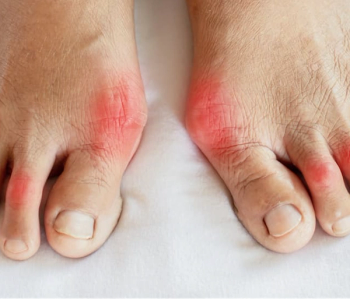
A heightened risk of hyperuricemia and gout was observed with heavier, more frequent alcohol consumption, especially in males.

Depressive symptoms in the first 2 years after diagnosis were linked to lower odds of achieving remission in both RA and PsA.

New analysis reveals obinutuzumab's potential to improve kidney inflammation and biomarkers in lupus nephritis.

Findings suggest MetS is linked to greater levels of pain catastrophizing in psoriatic arthritis, highlighting the need for multidisciplinary care.
The filing acceptance is based on positive data from the phase 3 REGENCY study. A decision on the approval is expected by October 2025.
ADI-001 now has FDA Fast Track Designation for relapsed/refractory lupus nephritis and systemic lupus erythematosus with extrarenal involvement.

Hypovitaminosis D was more prevalent in patients with lupus nephritis compared to patients with systemic lupus erythematosus without kidney disease.

The Urate-Lowering Therapy to Acute Treatment Ratio (ULTrA) was linked to fewer gout-related hospital admissions.

The analysis of NHANES data revealed an inverse association between dietary vitamin C intake and gout risk.

Patients with RA and obesity exhibited worse scores for subjective measures like pain and fatigue compared to those without obesity.

RA was linked to an increased risk of ischemic and hemorrhagic strokes, with further analysis revealing sex-based differences in stroke outcomes in men vs women with RA.

Compared to patients on stable TNFi, patients tapering TNFi to withdrawal experienced significantly more flares and had lower Boolean 2.0 remission rates.

More than half of patients with RA or PsA without obesity exhibited steatosis despite having low disease activity, with no differences observed based on methotrexate use and dosage.

Patients with RA had a greater risk of delayed cervical cancer screening, and smoking was associated with a decrease in prostate cancer screening in patients with RA.

Findings from a 2-year extension of the Plants for Joints randomized controlled trial show promise for the long-term benefits of diet, physical activity, and stress management in RA.

Findings underscore the impact of socioeconomic factors on disease management and therapeutic outcomes in patients with rheumatoid arthritis from different socioeconomic classes.

Findings showed the rates of TEAEs were generally similar between upadacitinib 15 mg and active comparators in RA and PsA.

Patients who achieved early remission with upadacitinib or adalimumab following an inadequate response to methotrexate had less pain/fatigue and better physical quality of life.

Phase 3 data showed patients treated with SHR0302 4 mg or 8 mg had greater improvements in ACR20 response rates and other key secondary outcomes versus placebo.

October 2nd 2023

October 20th 2025