
News|Articles|August 3, 2026
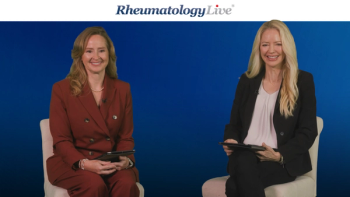
How Ready is CAR-T for Systemic Sclerosis: Carrie Richardson, MD
Author(s)Carrie Richardson, MD
Fact checked by: Victoria Johnson

Richardson discusses the safety profile of CD19 CAR-T, the debate over B cell targets, and more.
Advertisement
Cytokine release syndrome and immune effector cell-associated neurotoxicity syndrome are well documented in oncology, but their frequency and severity in
B cells are established drivers of systemic sclerosis, generating the autoantibodies nearly all patients carry and signaling T cells to sustain the autoimmune response. CD19 remains the dominant CAR-T target, though interest is growing in B cell maturation antigen to deplete the longer-lived plasma cells CD19-directed therapy leaves behind. Patients positive for anti-Scl-70 antibodies, tied to the most aggressive and treatment-resistant disease course, appear to carry a stronger B cell signature than other subtypes.
Infection risk from prolonged B cell depletion remains a central safety consideration, particularly around vaccination timing before CAR-T infusion. Most trials to date have restricted enrollment to patients with early, severe disease, leaving open how the therapy might perform in milder or longer-standing cases. Rheumatologists interested in offering CAR-T will also need a path to the procedural pieces, apheresis collection and post-infusion monitoring among them.
Carrie Richardson, MD, associate professor of medicine and co-director of the Northwestern Scleroderma Program at Northwestern Medicine, works alongside a hematology-oncology colleague experienced in autoimmune cell therapy to deliver CAR-T at her center. In the following interview, Richardson discusses the safety profile, the debate over B cell targets, and what rheumatologists will need before adopting this therapy.
HCPLive: Are there particular safety risks in systemic sclerosis trials that differ from oncology, and what should clinicians keep in mind?
Carrie Richardson, MD: For systemic sclerosis in particular, we have not seen undue safety risk compared to what is already known about the medication. Whether certain subgroups, different types of systemic sclerosis, are going to benefit more than others is going to be a question for the future. Infection risk is always a concern with these types of medications, since they're strongly immunosuppressive, and we especially understand the importance of vaccination with them, because they will temporarily wipe out the B cells that are generating protective antibodies. That's especially important at our center, so we try to protect people and make sure they don't experience infectious complications. But I think we've been reassured so far, though the safety data requires a larger population; you need more patients to see safety signals or the potential for harm. Sometimes those safety signals actually emerge in post-marketing, even after a product is approved, and you'll see rare negative outcomes, especially once more people are on a therapy.
Is there still debate about how B cell driven scleroderma is, and are there targets besides CD19 that might be better suited for CAR-T?
Richardson: That's a great question. We know B cells are active in the disease. One of the hallmarks of scleroderma is that almost universally, people produce autoantibodies, and autoantibodies are immune proteins secreted into the blood. They can be secreted by plasma cells, which are essentially very old B cells that live for a long time, but there is largely new autoantibody generation by B cells that are producing these proteins. People with systemic sclerosis almost universally have identifiable autoantibodies in the bloodstream, so we know B cells are active. B cells are also important as antigen-presenting cells, cells responsible for sampling the environment or tissue and starting an immune response, signaling whether something is potentially harmful.
In systemic sclerosis, these B cells are wrong; they're incorrectly identifying the body as something that needs to be attacked, and they tell the T cells to enhance that response, and then the T cells talk back to the B cells, and the cycle continues. They're really important as a primary driver of the immune response in talking to the T cells, so we know they're important, but B cells are not the only factor. The immune system is very complex, like a web, and the B cell is kind of at the center, a key piece, or a linchpin, and if you pull it, maybe the dominoes will fall, but there are other things too. Plasma cells may be important as well, so people are looking at targeting an antibody called BCMA, which may help deplete plasma cells and potentially enhance immune restoration in people with systemic sclerosis. There are many other potential targets too. Almost every aspect of the immune system in systemic sclerosis is altered, including macrophages, dendritic cells, B cells, T cells, and various cytokines, so the immune dysregulation is really complex and broad, and it affects many different organs. That B cells are involved is not a debate.
What is a debate is whether some subtypes of systemic sclerosis are more B cell driven than others. There is emerging data, based on clinical and translational studies, that people with anti-Scl-70 antibodies, also called anti-topoisomerase I, may have more of a B cell signature than others, though that's still a debate. We'll have to see whether certain subtypes or autoantibody types respond better to a B cell driven therapy than others, but there has been a broadening consensus that the Scl-70 antibody type, which tends to be the most aggressive and treatment-resistant, may be more amenable to anti-B cell therapy than others.
What safety and efficacy data would you need to see in later-phase trials before feeling comfortable recommending CAR-T if it's approved?
Richardson, MD: The FDA approval process is quite rigorous, and the standard for product approval, whether biologic or traditional, is much more rigorous in the US than in other countries. In general, when a product comes to market in the US, it has already gone through rigorous clinical trials and been shown to be safe and effective, as much as we can determine in the context of a clinical trial. There will always be new safety signals when a new product comes out; you have to expect unknown unknowns, because after 5 years and thousands of people have been on something, you may find a signal for one rare event that maybe 2 people get out of 1,000, and you're not going to know that if the trial was only 150 or 300 people. As a product comes to market, you have to balance its potential risks, which may be great with CAR-T, against the potential risks of the disease.
Systemic sclerosis is the right kind of disease for a risky product, because it has traditionally carried a high risk of death, the highest mortality of any autoimmune disease, and that's unacceptable. The impact it has on people's lives, the damage it does to their bodies, the disability it causes, is not mild, and it's not just a skin disease. When I see people with severe interstitial lung disease who aren't treated properly, they can go on to need a lung transplant. It can damage people's kidneys, cause permanent bends in their joints so they have difficulty even walking to the mailbox, and make it very difficult to care for a baby.
There are so many ways this disease can impact people's lives, not just shortening them, but also the permanent consequences and disfigurement, including on very visible parts of the body like the face. If we could restore a healthier life and body, that would make a huge impact. Patients living with a disease this devastating are often willing to accept higher risk with a new therapy, so as CAR-T looks safe and effective and gets approved, it will open up to more people, but we'll still have to have that conversation about high risk early on, and it will probably be offered to people at higher risk first, because the risks of the therapy, with its many unknowns, will still be potentially worth it for people whose disease is progressing, severe, and at high risk of permanent bodily harm.
As more data emerges and we have more post-marketing data, a lot of people with quote-unquote milder scleroderma, which is not mild, people with limited systemic sclerosis or without lung disease, are often excluded from these trials, but we know the disease can be horribly disabling through GI symptoms and Raynaud's. Not having a lot of skin tightening or lung fibrosis doesn't mean the disease is mild, so a lot of people have felt disappointed they're not eligible for these CAR-T cell trials. When the data comes out, we're going to have to see if it helps other aspects of the disease, like GI disease or Raynaud's, that aren't the primary targets of the trials. It would be really lovely to see if it's safe enough and effective for those other aspects of the disease. If it is, I think there may be people over time with milder disease, or who didn't fit the traditional trial criteria, who become eligible and benefit as well, and I would love that. I would love for us to optimize the safety in a way that gives more people the opportunity to say they're done with scleroderma, to put this into remission and tell people, even with quote-unquote less of the disease, that they're in remission. We'll have to see. Even when it gets approved, we'll know there's been as rigorous testing as there could be, but there will still be unknowns.
If CAR-T gets approved, what would it take for rheumatologists to feel equipped to start using this therapy?
Richardson, MD: That's also an excellent question. Right now, we work very closely with an autoimmune stem cell expert, Dr. George Georges, who is in hematology-oncology, and with this therapy being so new, that collaboration is really critical, because hematologist-oncologists have the most experience with the cell therapy itself, and we have the experience with the autoimmune conditions. Together, that's a great collaboration, but not everyone has an oncologist at their center who's interested in autoimmune disease and has experience with this, and I think that's critical. It will be a question over time whether hematologist-oncologists who aren't familiar with autoimmune disease will be comfortable giving this therapy in other places, or whether rheumatologists will need to be trained to administer it themselves if it gets approved, which would be a game changer for the field.
I do think it's possible, and over time, as it becomes more common, especially if products like bispecific T cell engagers become part of practice, I definitely think you'll see this used in rheumatology practice. Some of the methodologies used, like apheresis for harvesting cells and monitoring for complications, still make collaboration with hematology-oncology really important. I wonder whether this will emerge as a post-fellowship training program, or whether rheumatologists will need to rotate with a hematologist-oncologist to learn this therapy in the future. As we see what's possible and whether it's effective, it's going to be a question of how it gets delivered. We have a system in place here, but other places are going to need to revamp their traditional systems for this kind of collaboration.
Editor's Note: This transcript has been edited for grammar and clarity using artificial intelligence tools.
References
Muller F, Hagen M, Wirsching A, et al. CD19 CAR-T cells for treatment-refractory autoimmune diseases: the phase 1/2 CASTLE basket trial. Nat Med. 2026;32(3):1142-1151.
doi:10.1038/s41591-025-04185-6 Auth J, Muller F, Vasova I, et al. CD19-targeting CAR T-cell therapy in patients with diffuse systemic sclerosis: a case series. Lancet Rheumatol. 2025;7(2):83-93.
doi:10.1016/S2665-9913(24)00282-0
Advertisement
Related Content
Advertisement
Latest CME



























































Advertisement
Advertisement