
News|Articles|July 31, 2026
CAR-T's Early Promise for Reversing Damage in Systemic Sclerosis
Author(s)Carrie Richardson, MD
Fact checked by: Victoria Johnson

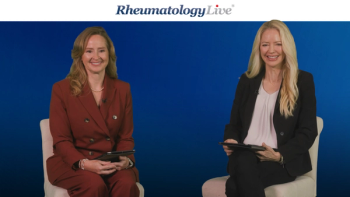
Carrie Richardson, MD, discusses what early CAR-T trial data mean for reversing damage and redefining remission in systemic sclerosis.
Advertisement
Achieving lasting remission in
In the phase 1/2 CASTLE basket trial, 9 patients with systemic sclerosis treated with CD19 CAR-T cell therapy showed no progression of lung disease, with forced vital capacity increasing 14.1% and modified Rodnan skin scores dropping from a median of 26 to 12 units at 6 months.1 Scl-70 autoantibody levels, associated with the most treatment-resistant disease subtype, decreased by 66% in this same cohort. The phase 1 Breakfree-1 trial reported similar findings, with 96% of evaluable patients with severe, refractory systemic sclerosis remaining off disease-directed therapy during follow-up.2
Whether fibrosis itself can regress once the immune system is reset remains an open question, though early case series have suggested reversal of internal organ fibrosis is possible. Traditional therapies have not been able to normalize scleroderma-specific autoantibodies, leaving the underlying immune dysregulation intact even when disease appears stable. Rechecking those markers under standard regimens still shows them positive, evidence the immune system was never fully corrected.
Carrie Richardson, MD, associate professor of medicine and co-director of the Northwestern Scleroderma Program at Northwestern Medicine, has followed this emerging data closely. In the following interview, Richardson discusses what CAR-T's early trial results mean for systemic sclerosis and how far the field is from redefining remission.
HCPLive: How do you see CAR-T potentially helping the unmet need in scleroderma, and what would the goal be, remission or something more modest?
Carrie Richardson, MD: I think it's a really interesting question, because traditionally our goal in scleroderma has been stability, and some people would consider stability in the past to be remission, but we know remission has not been achievable with traditional therapies. A lot of the therapies require lifelong treatment. People remain on immunosuppression, some are able to get off, but the disease may still simmer under the surface. There may still be embers of active disease that can progress, so people can develop long-term complications, even though we may not be appreciating the changes on a day-to-day basis.
When it comes to CAR-T, I think CAR-T is exciting and gives us, including me, hope, because it's a change in the way we approach scleroderma therapy. A lot of our therapies have targeted T cells, and a lot of the targets have been monoclonal antibodies that target specific inflammatory proteins. CAR-T gives the promise of an immune reset. In scleroderma, there are many things that are dysregulated, and there may be different immunologic pathways dysregulated for different people, but what CAR-T is trying to do is essentially press the reset button. We don't know yet, based on the long-term data, if that's true, and if it is true, how long it will last. We don't know if it will work for everyone, but I think the way it works is different from the way a lot of our other drugs work.
CAR-T actually works similarly in some ways to a drug we already use called rituximab, which we've been using for over a decade in systemic sclerosis. Rituximab targets a signal on B cells called CD20, identifies B cells through that signal, and gets rid of them, but it can't completely get rid of them. Most CAR-T cell products target CD19 on B cells, a different marker, and the targeting of CD19 may allow for a deeper depletion of those B cells. B cells identify proteins and tell the immune system whether it's worth attacking, so they can start the inflammatory or autoimmune response in people with autoimmune disease. The idea is these CAR-T cells, which can reach deeper into the tissue and go after different markers on the surface of B cells to get rid of them more effectively, may wipe out some of those autoimmune B cells that are doing bad things, and the B cells may come back fresh as if the person didn't have autoimmune disease. There's a lot of promise, but we're going to have to see what the data looks like. There's a lot of excitement, but there are still questions about long-term safety and effectiveness.
I think CAR-T may be just the beginning. There will be different modalities, different cells you can create into CARs, like CAR NKs, that will do the same thing, act as little stealth missiles and go after cells that may be harming the person's body. You're going to see something called bites, or bispecific T cell engagers, that can essentially perform the function of CAR-T in a different way. I think it opens up a whole new avenue for cell-based therapy in systemic sclerosis, as well as other autoimmune diseases. Systemic sclerosis is not the first to use this CAR-T cell approach; there was a big series published for lupus, so we have lots of data there, but I think you're going to see this emerge as a potential therapeutic modality for lots of different autoimmune conditions.
Biologically, how possible is it to reverse fibrosis in these patients, or is that damage largely irreversible?
Richardson: That's a really interesting question, and it gets at your initial question about what is possible, and how our definition of remission will change once we have more effective therapies. There's been a traditional dogma, which may or may not be true, that scarring is irreversible. What we know from other conditions, if you or I were to get really severe COVID and be in the ICU with a lot of lung scarring, many people will recover, and that scarring can go away. Scarring can, at least on a CAT scan, get better over time if you have an immune system that is behaving normally.
I think what's been the challenge in scleroderma is we have not gotten the immune system to behave normally yet, so even with our traditional therapies, if you check the scleroderma blood tests, the antibodies diagnostic for scleroderma, like Scl-70 or centromere, RNA polymerase III, our usual therapies have not gotten rid of those. If you recheck them with the therapies we already have, the blood markers still look like a patient with scleroderma, so we know with our traditional therapies, we're not making the immune system normal.
It's a big question, and I do have some hope that some of the things we may think of as damage in systemic sclerosis, though our traditional thinking is damage is irreversible, may actually be reversible, that there may be some remodeling of the tissue if we can restore normal immune function. If the background of someone's immune system still has this tendency to scar, it's not going to recover properly, but if we can restore that, I do think there may be more recovery than we expect. I don't think it'll be 100%. There are certain things that, in a reasonable timeframe, unless someone develops a major innovation in tissue regeneration, which I wouldn't rule out, may still be permanent damage. Tendons may shorten permanently, and we may not be able to lengthen them unless someone has a Nobel Prize-winning innovation, which would be excellent. But I think there are many things, like a certain degree of lung scarring, and skin scarring, I definitely think there's a possibility some of these things may regress if we're able to develop more effective therapies.
What did early trials like CASTLE and Breakfree-1 establish about CAR-T's potential use in systemic sclerosis?
Richardson: There are many different CAR-T cell trials, and we have studies looking that are later phase, that are in process, so I think we're going to see that data emerge at the ACR meeting. There's been some early promise. The very first report of CAR-T being used for systemic sclerosis suggested you may see a reduction in autoantibody levels, and that initial report also demonstrated perhaps some reversal of internal organ fibrosis, though we would need larger data to confirm that. What we are seeing emerge, not just from systemic sclerosis but from the growing body of evidence in CAR-T across many conditions, is that the safety signal is really important.
For the most part, the safety has been acceptable. Most cytokine release syndrome, an inflammatory reaction people get when given CAR-T, has been relatively mild and manageable. ICANS, a neurologic toxicity we worried about based on people treated with CAR-T for lymphoma having a higher risk, seems much lower and relatively rare in people with autoimmune disease. Some of the concerns we had about CAR-T have been alleviated by the data we've seen so far. A lot of the CAR-T regimens and products are slightly different, and the way the CAR-Ts are constructed is different, so there's still some debate about whether you need chemo upfront.
Most trials will include some sort of chemotherapy that prevents the body from rejecting the CAR-Ts, and it remains to be seen whether chemo-free regimens might be possible. Many trials in systemic sclerosis are also very restrictive on who can be included; you typically have to have early systemic sclerosis, but we're starting to see some expansion of those criteria, where people with longer disease durations may be included. As these trials increase, we're going to see whether some products work better or are safer than others, whether chemo-free regimens are possible, and whether this works well in people with early disease, within the first 3 to 5 years, or in people 5 to 10 years out, or beyond. There are still many unknowns, and I think we're going to see more of this data emerge at the ACR meeting.
Editor's Note: This transcript has been edited for grammar and clarity using artificial intelligence tools.
References
Muller F, Hagen M, Wirsching A, et al. CD19 CAR-T cells for treatment-refractory autoimmune diseases: the phase 1/2 CASTLE basket trial. Nat Med. 2026;32(3):1142-1151.
doi:10.1038/s41591-025-04185-6 Khanna D, Korman D, Bernstein E, et al. Efficacy and safety of BMS-986353, a CD19-directed chimeric antigen receptor T cell therapy manufactured using a next-generation process: updated data from a phase 1 trial in patients with systemic sclerosis [abstract]. Arthritis Rheumatol. 2025;77(suppl 9). Presented at: ACR Convergence 2025; October 24-29, 2025; Chicago, IL.
https://acrabstracts.org/abstract/efficacy-and-safety-of-bms-986353-a-cd19-directed-chimeric-antigen-receptor-t-cell-therapy-manufactured-using-a-next-generation-process-updated-data-from-a-phase-1-trial-in-patients-with-systemic-sc/
Advertisement
Related Content
Advertisement
Latest CME



























































Advertisement
Advertisement