

A significantly higher number of patients receiving voclosporin achieved good renal outcome when compared with placebo.
A significantly higher number of patients receiving voclosporin achieved good renal outcome when compared with placebo.

An analysis of data from the Cancer Prevention Study-II suggests cancer survivors had a more than doubling in risk of frailty-related bone fractures than their counterparts without cancer.
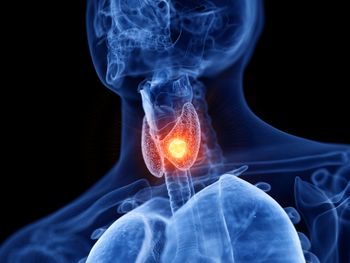
“Most thyroid diseases and rheumatoid arthritis are chronic diseases, and unfortunately, early signs of thyroid dysfunction are not specific and are often overshadowed by clinical manifestations of other diseases."

Investigators aimed to assess self-reported changes in physical activity during the COVID-19 pandemic.

Investigators note that healthcare approaches may benefit from including patient-reported experiences of living with and being treated for fibromyalgia.
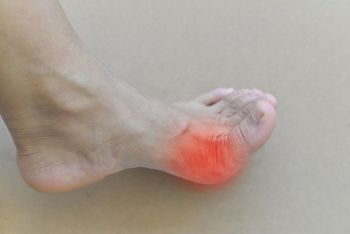
"It may be important to identify genetic variants from a gout genome-wide association study (GWAS) rather than serum urate GWAS, in case these variants have an effect on gout independent of their effect on serum urate.”
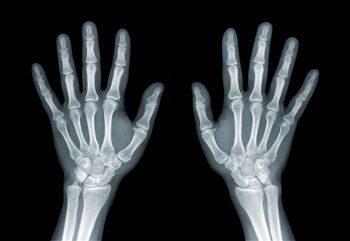
The PRERA trial was the first real-world, non-interventional study to analyze radiographic progression in patients with RA or PsA treated with etanercept.

Take 5 minutes to catch up on Rheumatology Network's highlights from the week ending October 29, 2022.

Investigators concluded febuxostat should still be used cautiously for patients with gout and cardiovascular diseases due to inconclusive results.

"Infections are one of the key determinants of early morbidity and mortality of patients with SLE, strongly linked to disease activity and immunosuppression."

Randomized clinical trials evaluating the effect of bDMARD or tsDMARD treatment in patients with psoriatic arthritis were included in the analysis.

Patients with rheumatoid arthritis had significantly higher levels of IgA anti-Pc-p27 antibodies and higher levels of IgG anti-Pc-p27 antibodies when compared with healthy controls.

Muscle wasting is a common characteristic associated with rheumatoid arthritis. Test your knowledge of muscle wasting in rheumatoid arthritis with this quiz.

“The lack of a biomarker of osteoarthritis has hindered development of effective therapies for this common disease,” investigators explained.

Low disease activity may be the most appropriate treatment target for patients with high levels of structural damage and functional disability.
Take 5 minutes to catch up on Rheumatology Network's highlights from the week ending October 22, 2022.

The sixth indication for the JAK inhbitior from AbbVie makes it the first in class approved for both nr-axSpA and ankylosing spondylitis.
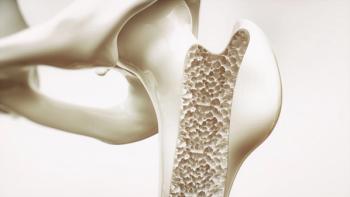
E Michael Lewiecki, MD, discusses his CCR West presentation “Sequential Therapy in Osteoporosis: When Does the Order Matter?”
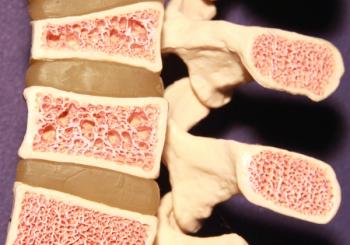
E Michael Lewiecki, MD, discusses his CCR West presentation “When is Osteopenia Osteoporosis?”

“Exercise is an important component of the treatment of fibromyalgia, but there was not a consensus understanding of the effect of various exercise programs on the quality of life, pain, and physical function of people with fibromyalgia.”
People with rheumatoid arthritis are also more likely to live with other chronic conditions, but specific ones vary by race. Test your knowledge of how race affects multimorbidity in this quiz.

Recent findings suggest that methotrexate reduces humoral vaccination response against COVID-19 in older, but not younger, patients with rheumatoid arthritis.

Risankizumab showed linear and time-independent pharmacokinetics in patients with active psoriatic arthritis and was comparable to those with plaque psoriasis.
Take 5 minutes to catch up on Rheumatology Network's highlights from the week ending October 15, 2022.

“Failed or inadequate response to disease-modifying antirheumatic drugs (DMARDs) is associated with poor prognosis," investigators noted.

Supplementation with probiotics was shown to improve hyperuricemia and symptoms of gout, among other inflammatory diseases.

Higher PGI scores, which signify better quality of life, were positively correlated with all SF-12 subscales except for role emotional.

The neutralizing serum activity against variants in patients receiving methotrexate only increased 20-23-fold after booster vaccination, while the serum activity in those in the non-immunosuppressed group increased 67-73-fold.
The study examined ozoralizumab without concomitant therapy, as methotrexate cannot be given to all patients with rheumatoid arthritis due to inadequate efficacy and tolerability.
How much do you know about the Rheumatic Disease Report Card and how it relates to your practice? Test your knowledge with this quiz.