

Radiographic non-progressors treated with guselkumab achieved patient-reported minimal disease activity criteria of minimal pain and normalized physical function more often than radiographic non-responders.
Radiographic non-progressors treated with guselkumab achieved patient-reported minimal disease activity criteria of minimal pain and normalized physical function more often than radiographic non-responders.

Compared with the control group, patients in the exercise for wellbeing (Qi Gong) and physiotherapy groups reported statistically significant improvements at week 5 in joint range of movement, muscle strength, spirometry, and quality of life.

Improvements may be due in part to the association between weight loss and fewer pain symptoms in patients with fibromyalgia.

The approval was based on positive results from the Phase 3 SAPHYR trial, which showed that nearly 3 times more patients achieved sustained remission with sarilumab when compared with placebo.

Results of a recent review showed that adalimumab, etanercept, golimumab, and infliximab are effective and well-tolerated treatments options for patients with juvenile idiopathic arthritis.

Nipocalimab, a FcRn blocker, significantly improved symptoms and reduced immunoglobulin autoantibody levels in patients with myasthenia gravis.

Multivariable models indicated that improvements in the physical component score and mental component score could be predicted by better self-efficacy scores in patients with systemic lupus erythematosus.

Patients with juvenile idiopathic arthritis were at a greater risk of developing autoimmune thyroid disease if they were female, reported ANA and/or RF positivity, and a family history of thyroid disease.
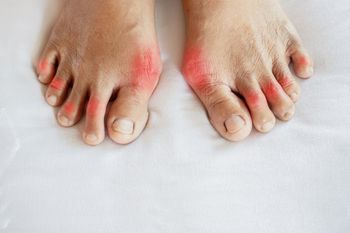
Investigators evaluated the link between gout and thalassemia using data from Taiwan's Longitudinal Health Insurance Database 2000 (LHID 2000).

Study results are the first to demonstrate that tofacitinib may be an effective treatment option for Chinese patients with active psoriatic arthritis.
Of the 23 biomarkers identified in patients with gouty arthritis and hyperuricemia, kynurenic acid, thymine, and phosphatidylinositol (PI) differed from previous gout research.
Patients' perceptions of the effectiveness and necessity of allopurinol for gout treatment proved to be strong factors influencing intentional adherence.

Ginger Hultin, MS, RDN, explained the benefits of an anti-inflammatory nutrition plan for patients living with rheumatic and autoimmune conditions, as well as what rheumatologists need to know.

An analysis of the DELIVER and DAPA-HF trials provides an overview of the impact of gout on heart failure outcomes and effects of dapagliflozin in this patient population.

Investigators identify a strong association between exposure to air pollution and bone mineral loss in postmenopausal women.
Compared with treatments like allopurinol, nanoparticles can improve the biocompatibility and bioavailability while reducing toxicity and side effects in patients with gout.

Guselkumab, an interleukin-23 inhibitor, demonstrated sustained improvements in both TNF-naïve and TNF-experienced patients with psoriatic arthritis.

Data from the phase 2 CLUE trial provide insight into the safety and efficacy of tigulixostat as a serum urate-lowering therapy in patients with gout with hyperuricemia.

In this Q&A, Rubén Queiro, MD, PhD, discussed the findings of a study that evaluated the retention rate and safety of ixekizumab in patients with psoriatic arthritis in real clinical practice conditions.

Investigators noted that presenting tophi in perioperative patients was found to be an independent risk factor for gout recurrence within the first year postoperative.

While high-sensitive Troponin T (hsTnT) is primarily used as a marker of heart disease, data suggests its potential as a useful marker of inflammation in the joints.

While the benzbromarone group had a slightly higher rate compared to the control group, this difference did not reach statistical significance.

Patients receiving guselkumab reported significant improvements in Psoriasis Area and Severity Index (PASI) and Dermatology Life Quality Index (DLQI) scores over 36 months.

Electronic patient-reported outcome (ePRO) questionnaires may allow rheumatologists to better understand the patient's experience and monitor improvements over time.
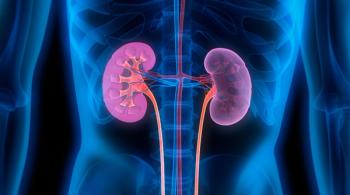
The study utilized a nationwide cohort of patients with hemodialysis and peritoneal dialysis to evaluate gout prevalence, practice patterns, and clinical associations.

Investigators hypothesized that patients with fibromyalgia who avoid activities because of pain would be more likely to perceive more intense pain levels after walking due to catastrophizing.

An analysis of survey data from more than 2000 patients in Western Sweden is providing insight into how the impact of inflammatory joint disease on health-related quality of life differs among those with gout, RA, PsA, and ankylosing spondylitis.

The systematic review compared mHealth interventions with conventional treatment or nonintervention to determine the pain management effects of mobile-based self-management strategies.
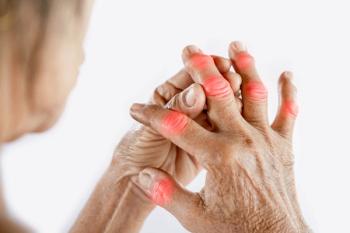
Results may help minimize the risk of developing hyperuricemia, gout, and related adverse events in patients receiving antihypertensive drugs.

As an industry and a society, we must take gout more seriously. That effort begins with the physicians who diagnose and treat it.