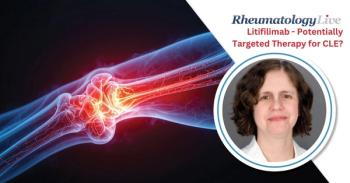
Werth discusses what the 52-week AMETHYST Part A data add to the case for litifilimab in antimalarial-refractory cutaneous lupus erythematosus.
The GLEAM trial is currently enrolling patients to receive SC291, with data expected in 2025.
The FDA has granted Fast Track Designation to Sana Biotechnology’s SC291 chimeric antigen receptor (CAR) T-cell therapy for the potential treatment of relapsed/refractory
“We are pleased to receive Fast Track designation from the FDA for SC291, which highlights the need for new treatment options for patients with relapsed/refractory SLE,” Dhaval Patel, MD, PhD, Chief Scientific Officer of Sana, said in a statement.1 “As a HIP-modified allogeneic CAR T therapy with a scaled manufacturing process that produces hundreds of patient doses per manufacturing run, SC291 has the potential to serve as a universal off-the-shelf therapy that can address this large unmet need. We look forward to sharing initial data from the ongoing GLEAM trial.”
SC291 is a hypoimmune (HIP)-modified CD19-directed allogeneic CAR T therapy. It is being evaluated in the phase 1 GLEAM trial (NCT06294236) in patients with B-cell mediated autoimmune diseases including lupus nephritis, extrarenal lupus, and antineutrophil cytoplasmic antibody (ANCA)-associated vasculitis. The study is currently enrolling and initial data is expected in 2025.
The GLEAM trial will last 24 months and is primarily evaluating safety and tolerability of SC291. Secondary outcomes assessed over 12 months include change from baseline in renal function as measured by Estimated Glomerular Filtration Rate (eGFR), change from baseline in proteinuria as measured by Urine Protein Creatinine Ratio (UPCR), duration of drug free remission, time to relapse, change from baseline of Systemic Lupus Erythematosus Disease Activity Index 2000 (SLEDAI-2K), change in disease activity as measured by proportion of subjects achieving complete renal response or partial renal response, change in disease activity as measured by proportion of subjects achieving modified Definitions Of Remission In Systemic Lupus Erythematosus (DORIS) remission, change in disease activity as measured by proportion of subjects achieving remission (Birmingham Vasculitis Activity Score version 3 [BVAS v3] of 0), and change in disease activity as measured by change from baseline in BVAS v3. The trial will also assess levels of SC291 CAR+ T cells in the blood over 24 months.
Recent updates in lupus treatment were presented at the recent
“People were able to taper steroids and their lupus symptoms got significantly better through the study. We really addressed both of those needs, that people need to be on less steroids and feel better, and we managed to do that really nicely,”
Clowse and colleagues found that around half (49.5%; n = 103) of the DZP group and 34.6% (n = 37) of the placebo group achieving BICLA response at week (P = .0110; difference, 14.6% [95% CI, 3.3-25.8]). Similarly, 60.1% (n = 125) of the DZP group and 41.1% (n = 44) of the placebo group achieved SRI-4 response at week 48 (nominal P = .0014; difference, 18.8% [95% CI, 7.3-30.3]).2